Case study US
Hawaii hotspot track
Hawaiʻi to Emperor seamounts
The Hawaiian island and seamount chain becomes older away from its active southeastern end. It provides evidence of oceanic plate movement over a long-lived volcanic source.
Preparing map style and visible tiles…
Location: 19.40°, -155.30°
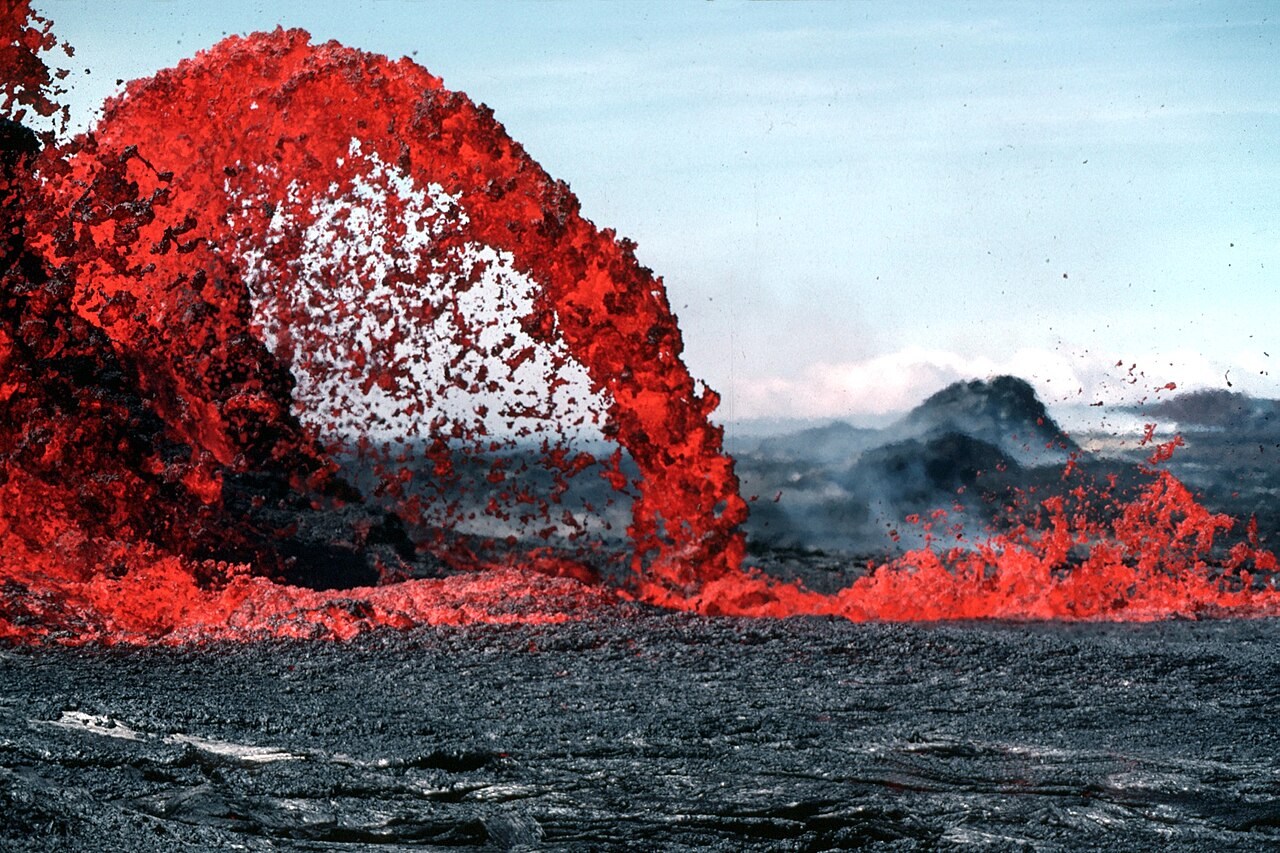
Repeated basaltic eruptions build broad shield volcanoes in Hawaiʻi. As the Pacific Plate moves relative to the hotspot, older volcanoes become inactive and new centres develop nearer the active source. Subsidence and erosion continue after volcanic activity ends.
Compare position and age along the chain in the hotspots model. Discuss why the bend towards the Emperor seamounts is more complex than a perfectly fixed hotspot and a plate moving in one unchanging direction.
Exam-style question
Why are Hawaiian volcanoes shields rather than stratovolcanoes, and how does the island chain record plate motion?
Teacher hint: Connect relatively fluid basaltic lava with shield shape, and increasing volcanic age with motion away from the active source.
Process labs
Sources
- USGS Hawaiian Volcano Observatory
- NOAA / ocean exploration seamounts