Case study Shared
Iceland and Eyjafjallajökull
Mid-Atlantic Ridge
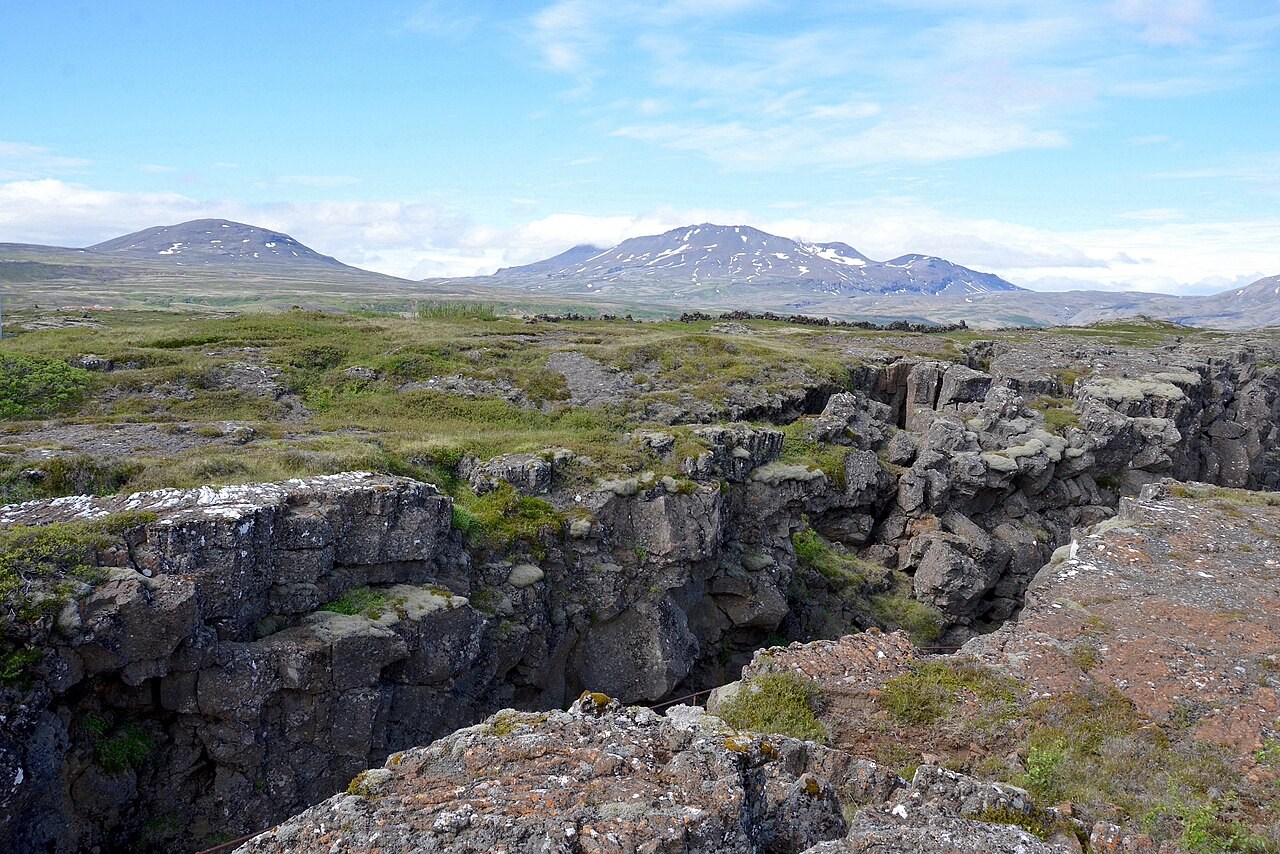
Iceland exposes a spreading plate boundary above sea level. Its rifts and volcanoes let students connect crustal extension with magma rising from the mantle.
Preparing map style and visible tiles…
Location: 63.63°, -19.62°
The Mid-Atlantic Ridge crosses Iceland, where the North American and Eurasian plates move apart. Extension produces faults and fissures, while rising mantle material partly melts as pressure falls. An additional mantle upwelling contributes to the island’s unusually abundant volcanism.
Basaltic lava is common, but Iceland’s eruptions do not all behave alike. Magma composition, gas and interaction with ice or water affect explosivity. Compare a divergent-boundary model with a volcano model before discussing a particular eruption.
Exam-style question
Explain why Iceland has both basaltic fissure eruptions and occasional explosive, ash-rich events such as 2010.
Teacher hint: Explain the divergent boundary and mantle upwelling, then consider how magma composition and interaction with ice can alter eruption style.
Process labs
Sources
- IMO / Icelandic Met Office
- BGS — Eyjafjallajökull 2010
- NASA Earth Observatory