Case study UK
Jurassic Coast
Dorset and East Devon
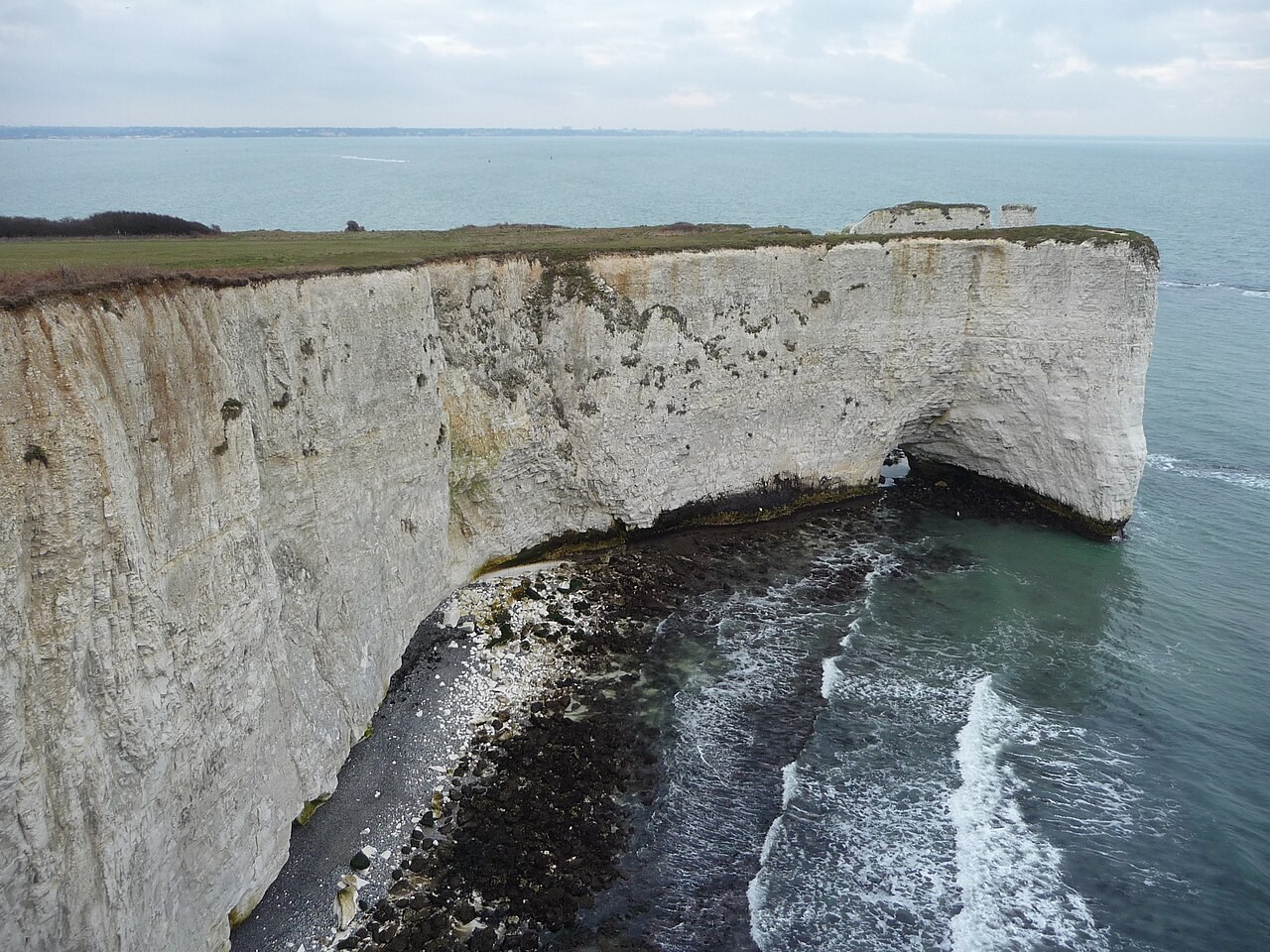
The changing rocks of the Dorset and East Devon coast produce contrasting cliffs, bays and arches. Durdle Door and Old Harry Rocks show how coastal erosion works with geological structure.
Preparing map style and visible tiles…
Location: 50.62°, -2.25°
Rock resistance and the orientation of beds help determine where headlands and bays develop. Durdle Door is a limestone arch, while Old Harry Rocks are chalk stacks. These are separate examples that help illustrate stages of coastal erosion, rather than a single landform observed through time.
Waves exploit joints and other weaknesses, while weathering and gravity also weaken cliffs. Compare the model’s cave–arch–stack sequence with the photographs and ask what evidence would be needed to reconstruct a particular headland’s history.
Exam-style question
Using a named Jurassic Coast landform, describe the sequence from cave to stump.
Teacher hint: Explain how erosion enlarges weaknesses into a cave and arch, then how collapse can leave a stack and eventually a stump.
Process labs
Sources
- Jurassic Coast Trust / UNESCO
- BGS — Dorset coast