Case study US
Mammoth Cave
Kentucky
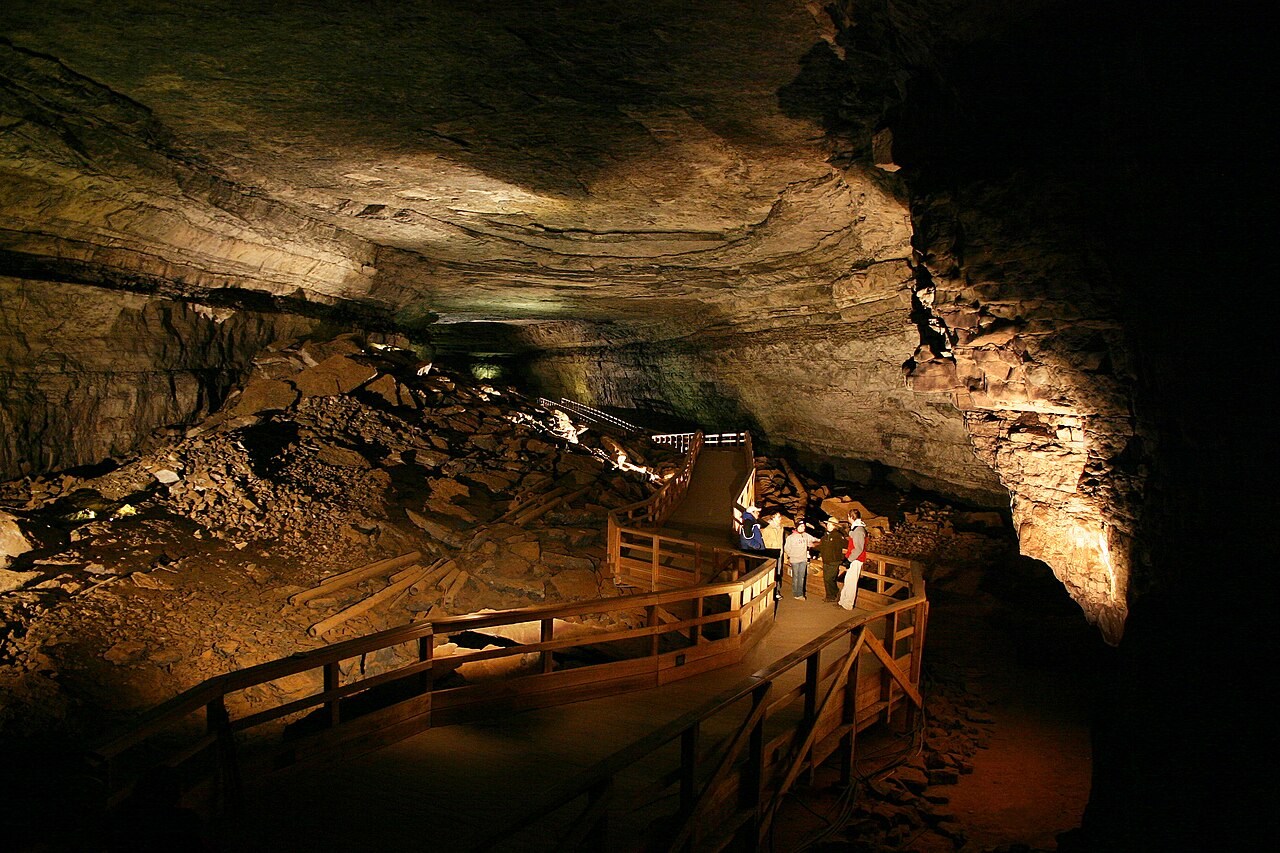
Mammoth Cave developed as water dissolved limestone and enlarged underground routes. Its passages provide a comparison with karst drainage in the Yorkshire Dales.
Preparing map style and visible tiles…
Location: 37.19°, -86.10°
Water containing dissolved carbon dioxide reacts with limestone and can enlarge fractures into passages over long periods. Cave levels and their relation to rivers help reconstruct changes in drainage and base level.
Use the karst model to follow water from infiltration to an underground channel and spring. Contrast dissolution of limestone with weathering in less soluble rock, and avoid assuming that every underground passage is visible from the surface.
Exam-style question
Why do sinkholes and caves cluster on carbonate rocks rather than on granite?
Teacher hint: Explain how weakly acidic water dissolves calcite along fractures. Other rocks, including granite, do not develop by the same carbonate-dissolution process.
Process labs
Sources
- NPS / USGS Mammoth Cave