Case study US
Phoenix urban heat
Arizona
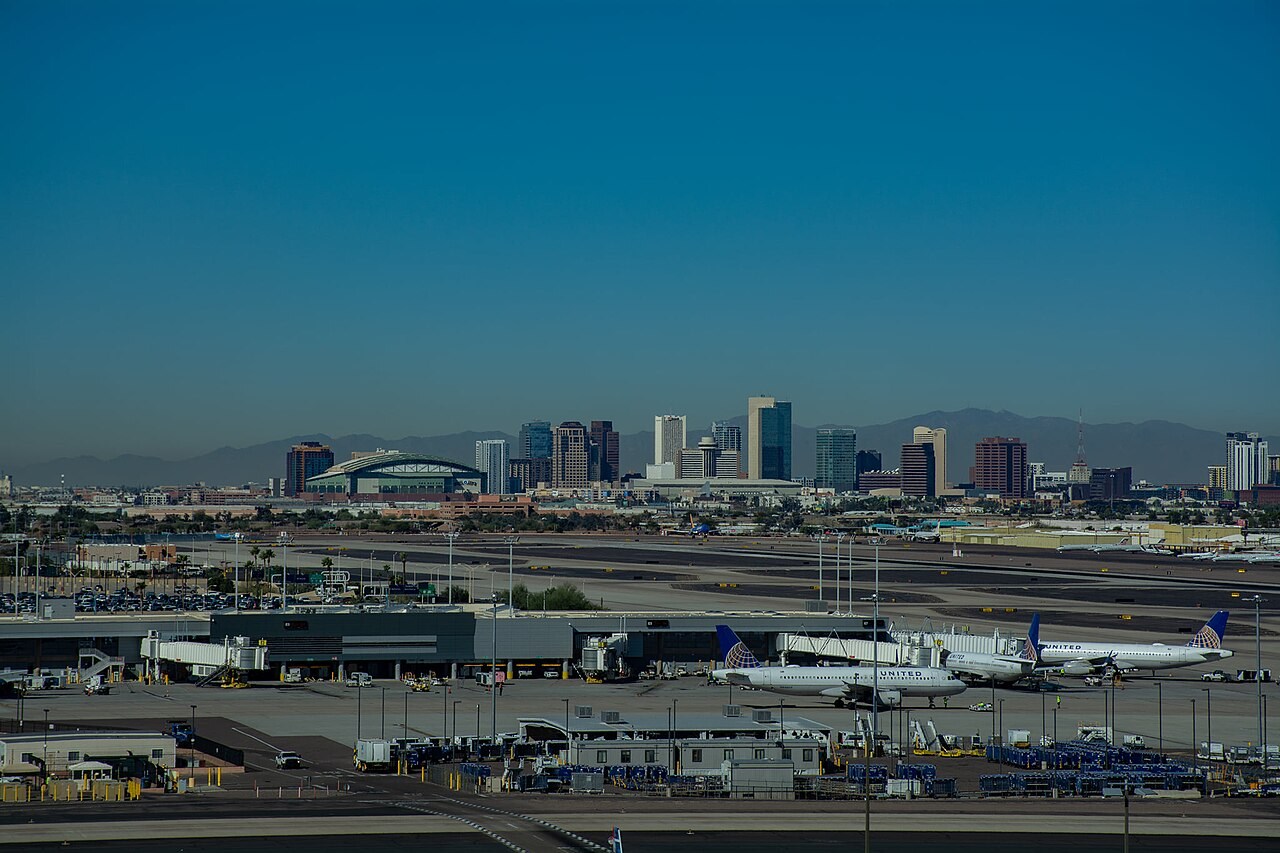
Phoenix illustrates how buildings, paving and limited moisture can influence urban temperature. Heat stored during the day can keep built surfaces warm after sunset.
Preparing map style and visible tiles…
Location: 33.45°, -112.07°
Urban surfaces differ from surrounding land in reflectivity, heat storage, shade and evaporation. Paving and buildings can store substantial energy, while limited soil moisture reduces evaporative cooling. The balance changes through the day and between neighbourhoods.
Compare surface properties in the energy-budget model. Ask students to distinguish a thermal image of surface temperature from an air-temperature measurement, then discuss how trees, shade and building materials alter local conditions.
Exam-style question
Explain why a city can stay warmer than surrounding desert at night, using albedo and latent heat.
Teacher hint: Discuss heat storage, reduced evapotranspiration and surface properties, then explain why the urban contrast can persist into the night.
Process labs
Sources
- NOAA / NWS urban heat