Skip to content

417 words used in the labs.

Find a term from the labs, understand the process behind it, and see how it appears in the landscape. Each entry connects an explanation with a real observation and a model you can explore.

Reverse fault

A fault on which the hanging wall moves up relative to the footwall, commonly under compression. A low-angle reverse fault is called a thrust. Displaced rock layers help identify motion even after erosion changes the surface.

What to look for

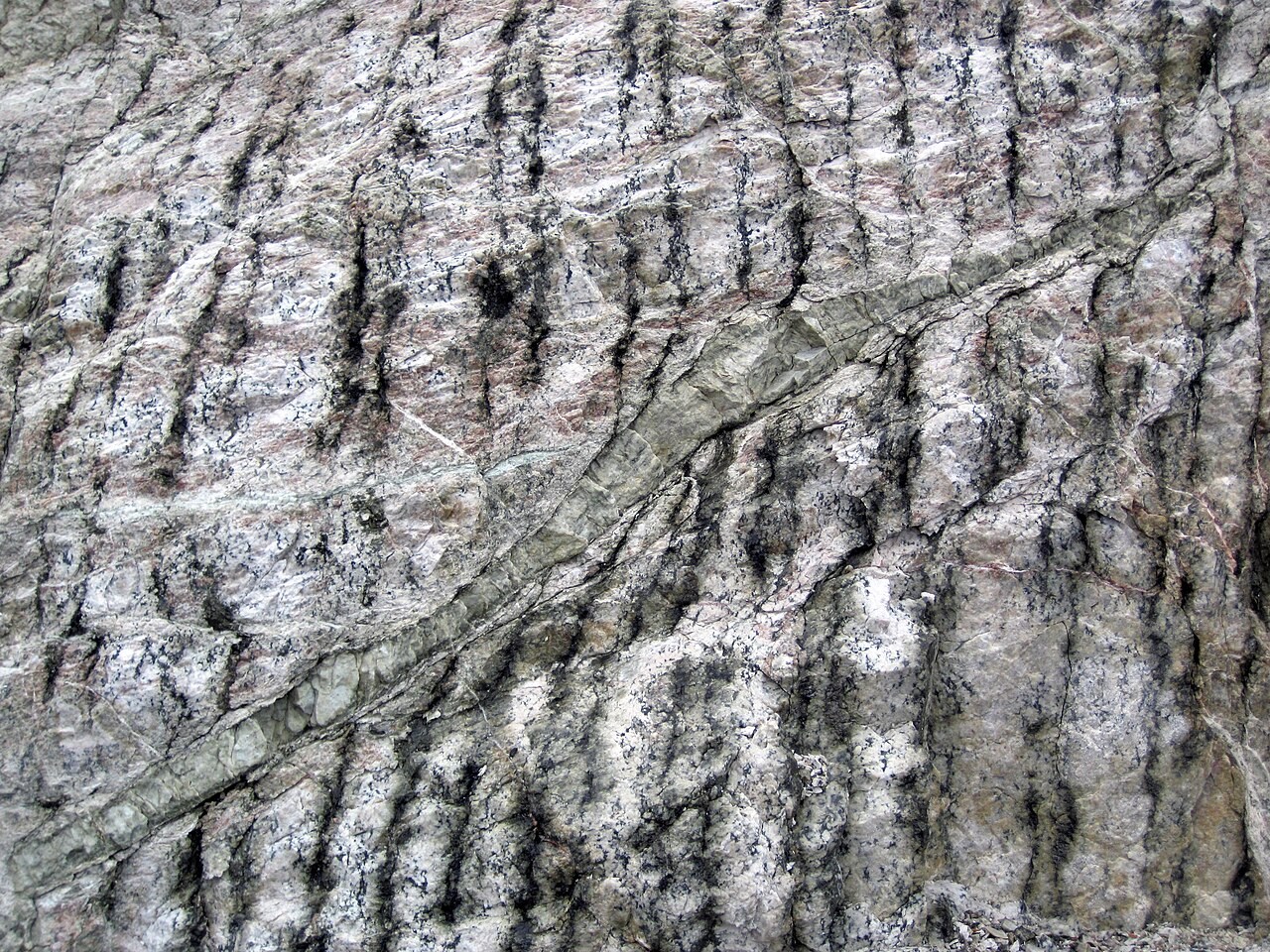
Reverse fault in layered igneous rock from Montana's Stillwater Complex. Trace matching layers across the break: the hanging wall moved up relative to the footwall.

A reverse fault offsets contrasting mineral layers in a rock sample from the Stillwater Complex, Montana.
Loading photograph

Explore further with USGS water glossary · USGS volcano glossary · NPS glacial geology · NASA Earth facts. Photograph acknowledgements are collected on the Image credits page.