Term
Trade winds
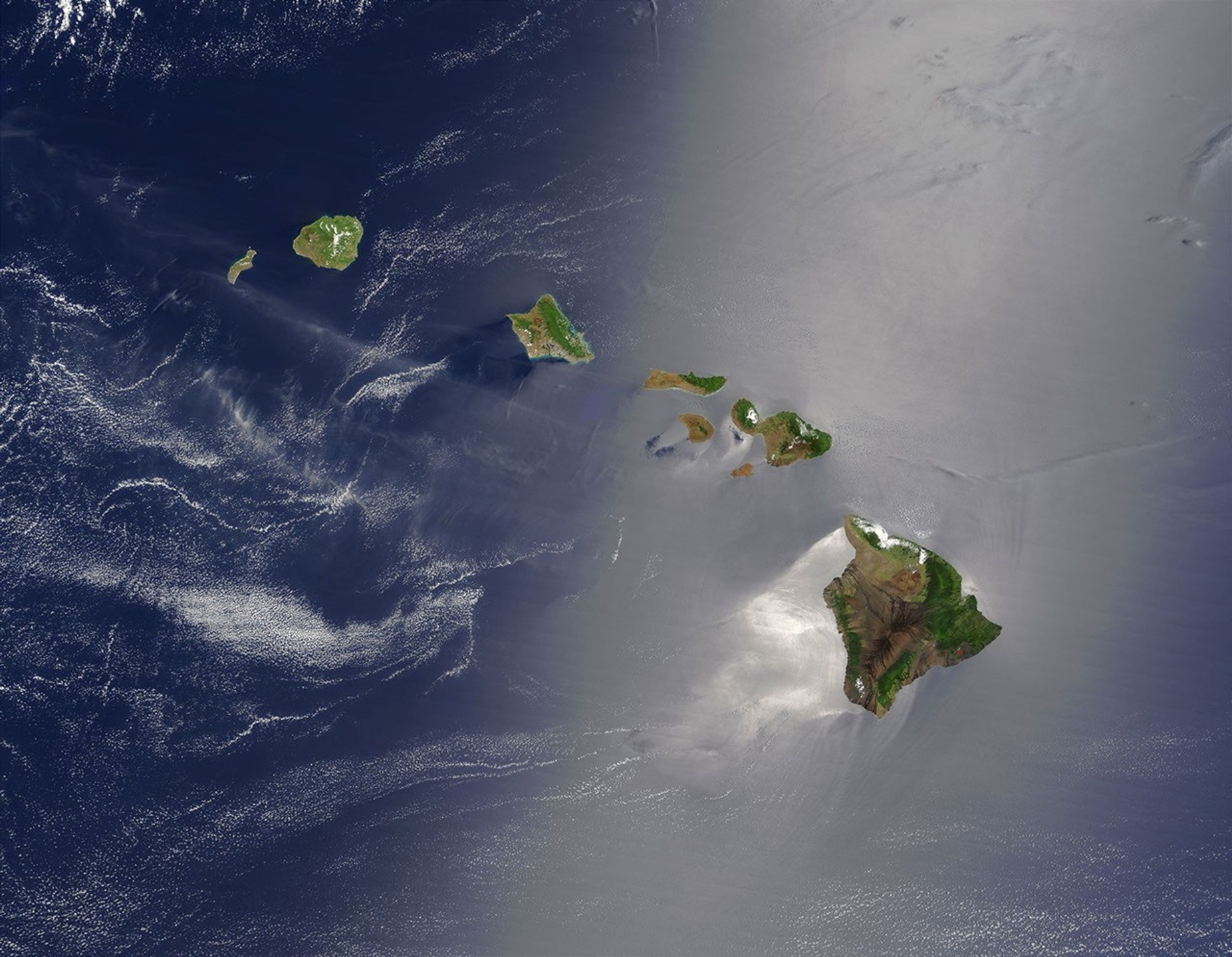
The prevailing tropical surface winds blowing towards the equatorial convergence zone. Earth’s rotation gives them an easterly component: they generally come from the northeast in the Northern Hemisphere and southeast in the Southern Hemisphere. Their position and strength vary seasonally.
What to look for
Terra MODIS, 27 May 2003. Northeasterly trade winds favour wetter, greener windward slopes; leeward slopes are drier. The bright ocean is sunglint.
Related labs
Loading photograph