Case study US
Dust Bowl
Southern Great Plains
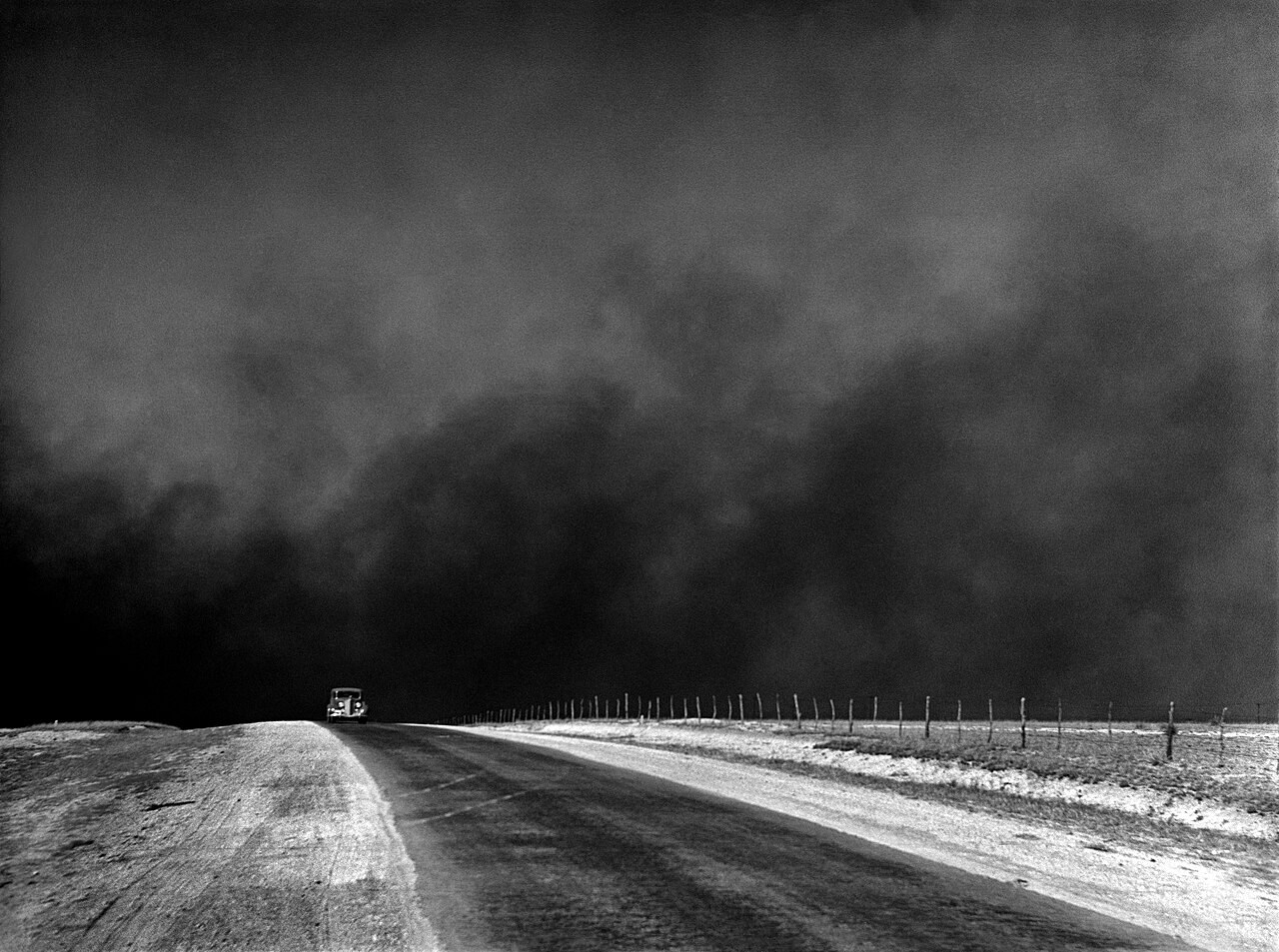
The Dust Bowl shows how drought and loss of protective vegetation can make soil vulnerable to wind erosion. Land management changed how easily dry particles could be removed.
Preparing map style and visible tiles…
Location: 36.68°, -101.48°
During the Dust Bowl, severe drought coincided with exposed and disturbed soils across parts of the Great Plains. Wind detached and transported particles, sometimes carrying fine dust far from its source. Vegetation loss reduced protection from direct wind and removed roots that helped hold soil together.
Use the soil-erosion model to compare bare ground with covered ground. Ask students to separate the climatic trigger from the land-use conditions that increased vulnerability, then compare wind removal with water-cut gullies on the Loess Plateau.
Exam-style question
Explain how vegetation removal made Great Plains soils vulnerable to wind erosion in the 1930s.
Teacher hint: Explain how roots, surface cover and roughness reduce sediment movement, and why dry exposed topsoil is more easily eroded.
Process labs
Sources
- NOAA / NCEI drought and Dust Bowl
- USDA NRCS soil erosion history