Case study US
Grand Canyon
Arizona
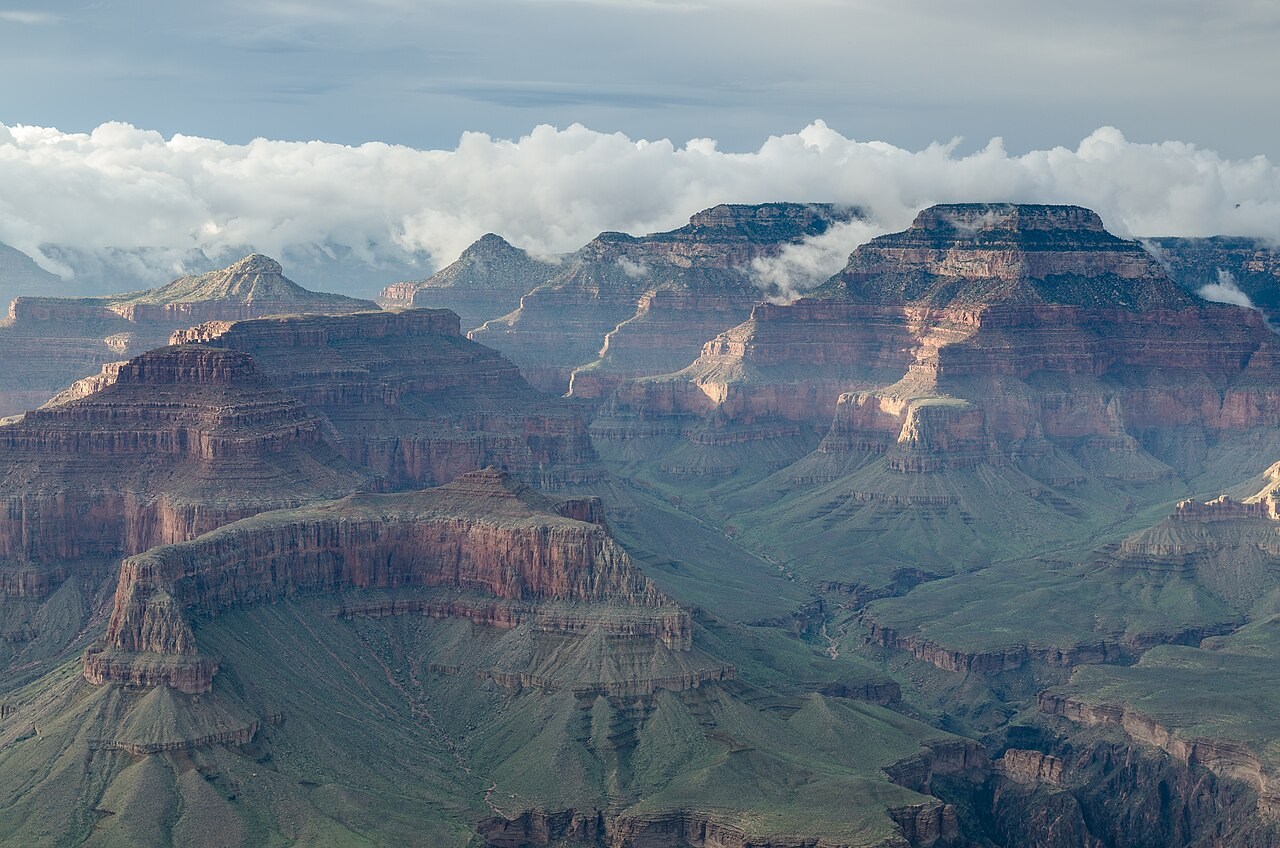
The Grand Canyon exposes old rock layers within a much younger river-cut valley. Separating the age of the rocks from the age of the landform is the key to reading its history.
Preparing map style and visible tiles…
Location: 36.05°, -112.14°
Rock layers exposed in the canyon preserve long intervals of deposition, deformation and erosion. Their sequence is not a clock that runs at one constant rate: unconformities represent missing time, and the oldest exposed rocks are far older than the canyon itself.
The Colorado River cut into an elevated landscape after much of that rock history had occurred. Use the geologic-time and landform models to distinguish rock formation, uplift and river incision, then identify which observations support each part of the explanation.
Exam-style question
Distinguish the age of the rocks in the Grand Canyon walls from the age of the canyon as a landform.
Teacher hint: Date the rocks and the incision separately. Old sedimentary layers can be exposed by a much younger episode of erosion.
Process labs
Sources
- USGS / NPS Grand Canyon