Teachers
A lesson for your classroom or geography club
Tsunami
All teacher notes · Open the lab
A suggested lesson sequence
Use these stages at your own pace. Pause for students to sketch, compare observations or lead part of the demonstration.
01
Observe
Scrub the first source stage and explain water displacement, contrasting it with wind-driven surge. Continue to the separate propagation approximation and follow the prescribed wave packet.
02
Tinker
Read the same front’s speed in deep and shallow water. Use the metre-scale chart to compare amplitudes.
03
Explain
How does decreasing water depth change the speed and height of a long wave approaching the coast?
04
Check
Choose an answer and explain your reasoning. Each question includes feedback.
Rehearse with the model
The same scene and controls as the lab. Load it when you are ready; use Start projector for the full classroom view.
Before the lesson
Explain how seafloor displacement generates a tsunami and why its speed and height change as it enters shallow water.
Open the model before the lesson and choose a view that makes the important feature easy to see. Drag to rotate, and use the on-screen controls to change one variable at a time. The Controls panel explains the available keyboard shortcuts.
Pause the animation at a useful moment. Ask students what should happen next, then play it to test their explanation.
Guide the demonstration
Scrub the first source stage and explain water displacement, contrasting it with wind-driven surge. Continue to the separate propagation approximation and follow the prescribed wave packet.
Read the same front’s speed in deep and shallow water. Use the metre-scale chart to compare amplitudes.
Discuss a common misconception
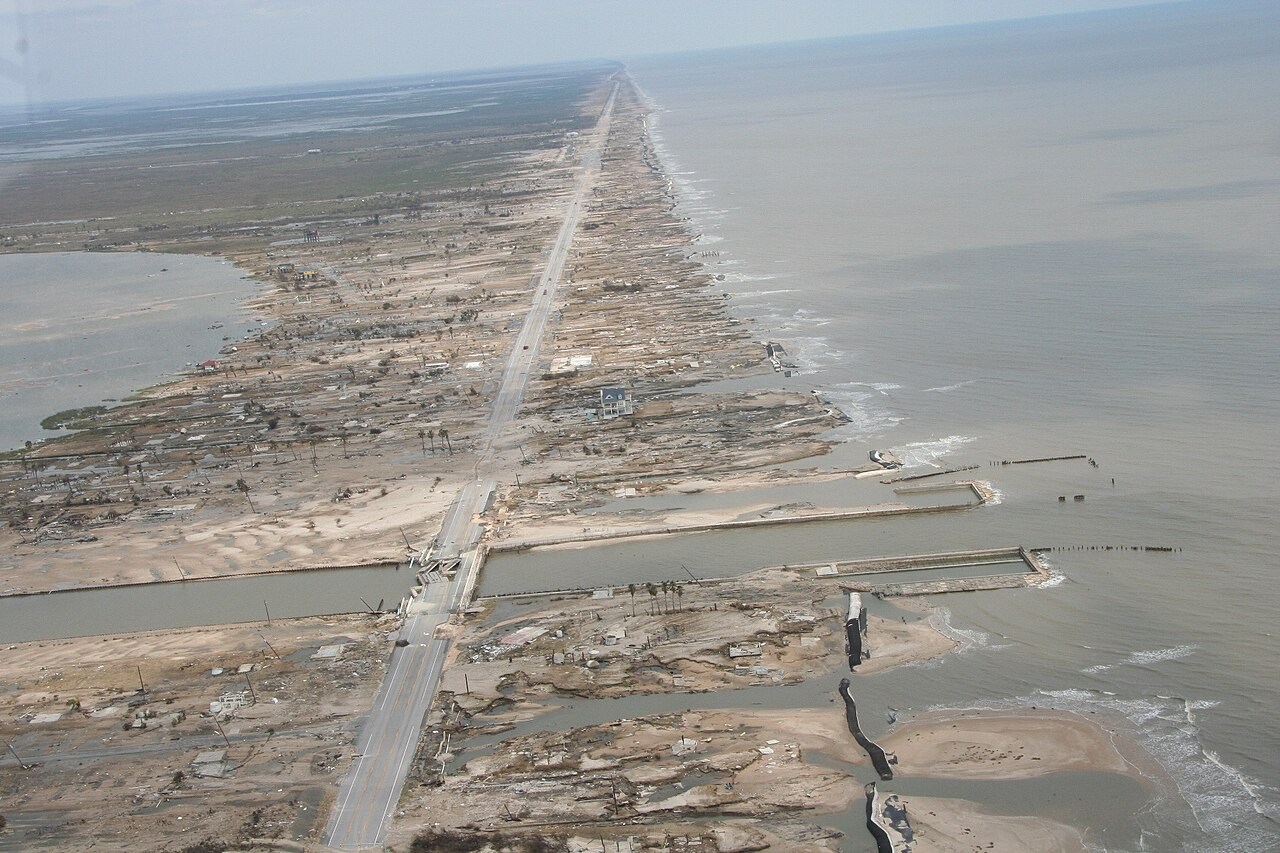
“A tsunami and a storm surge are the same kind of coastal wave.” A tsunami is a sequence of long waves generated by rapid water displacement, such as seafloor movement or a landslide. Storm surge is an abnormal water-level rise driven mainly by storm winds and atmospheric pressure. Their causes, propagation and warning evidence differ.
Build the explanation
A tsunami has a long wavelength and travels faster in deeper water. As it crosses into shallower water, it slows and its amplitude can increase as energy is concentrated into a smaller depth.
Read the same front’s speed in deep and shallow water. Use the metre-scale chart to compare amplitudes.
This long-wave calculation ends offshore and excludes breaking, run-up and inundation on land.
Teaching notes
Distinguish a tsunami from astronomical tides and wind-driven storm surge, including the 1953 North Sea event.
Explain why a tsunami can have a small wave height in deep water and change greatly as it enters shallow water.
Connect coastal flooding to the generating process instead of identifying the hazard from water level alone.
Check understanding
Open Check for 4 questions. Ask students to explain their choice before revealing the answer.
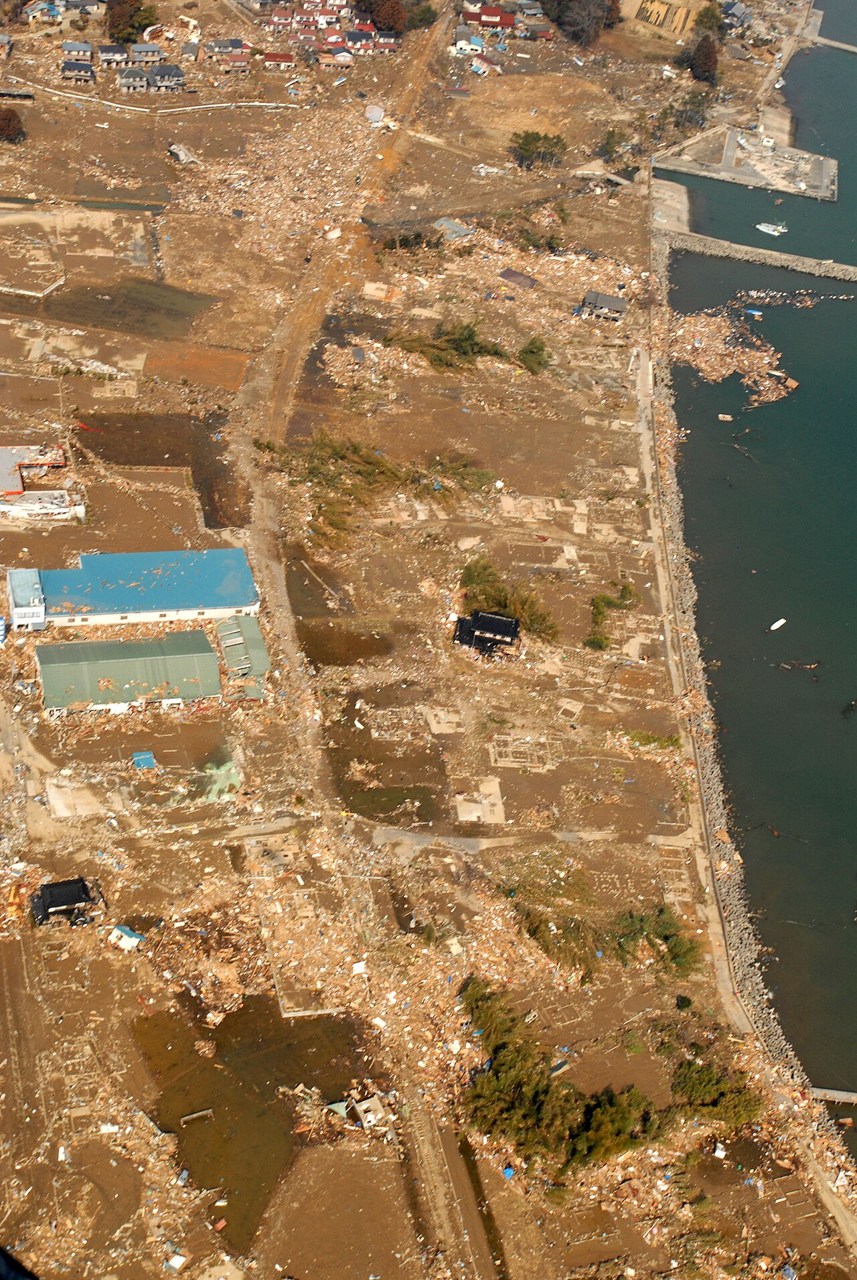
Return to the opening photograph. Ask students to identify one visible feature and explain which part of the model helps account for it.
Look more closely
Use these observations to connect the vocabulary to features students can identify.
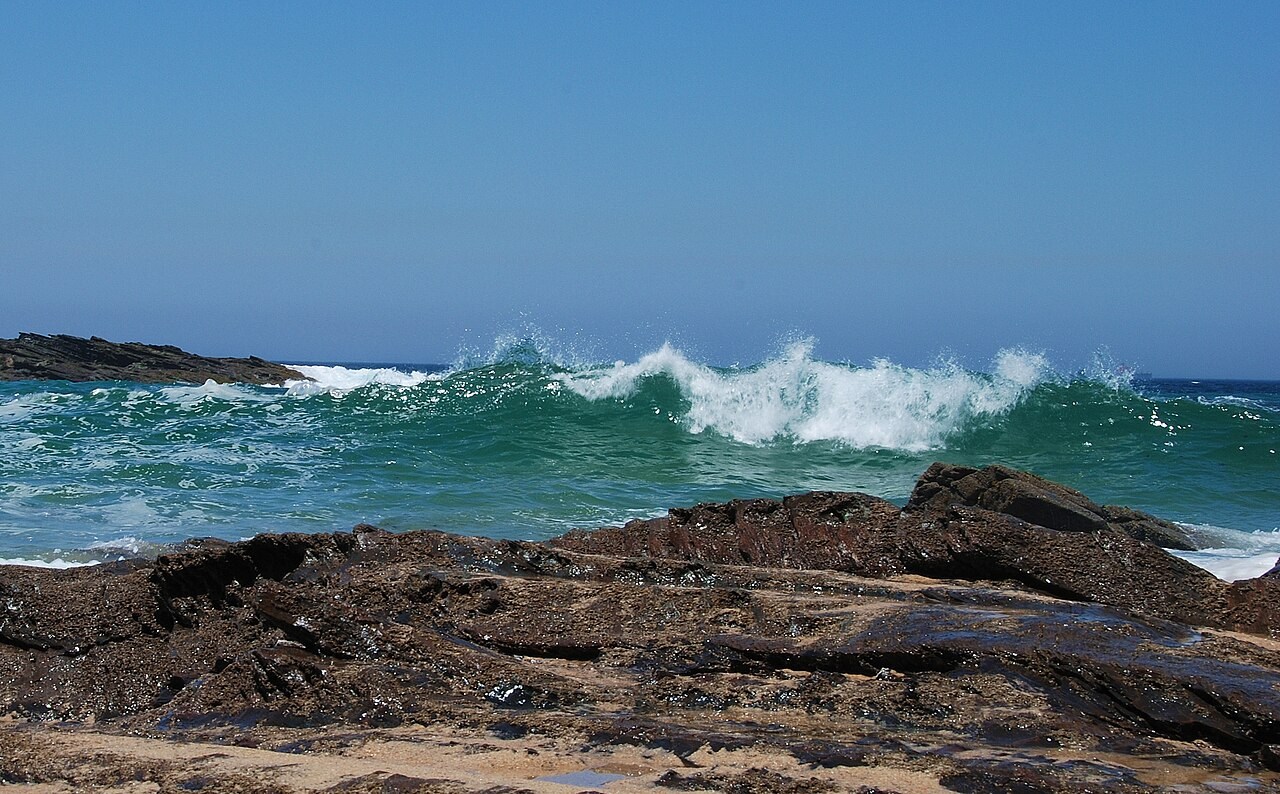
Shoaling
Storm surge
Sources to keep beside the lesson
- NOAA tsunami
- USGS
- NOAA tsunami propagation