Teachers
A lesson for your classroom or geography club
Wind landforms
All teacher notes · Open the lab
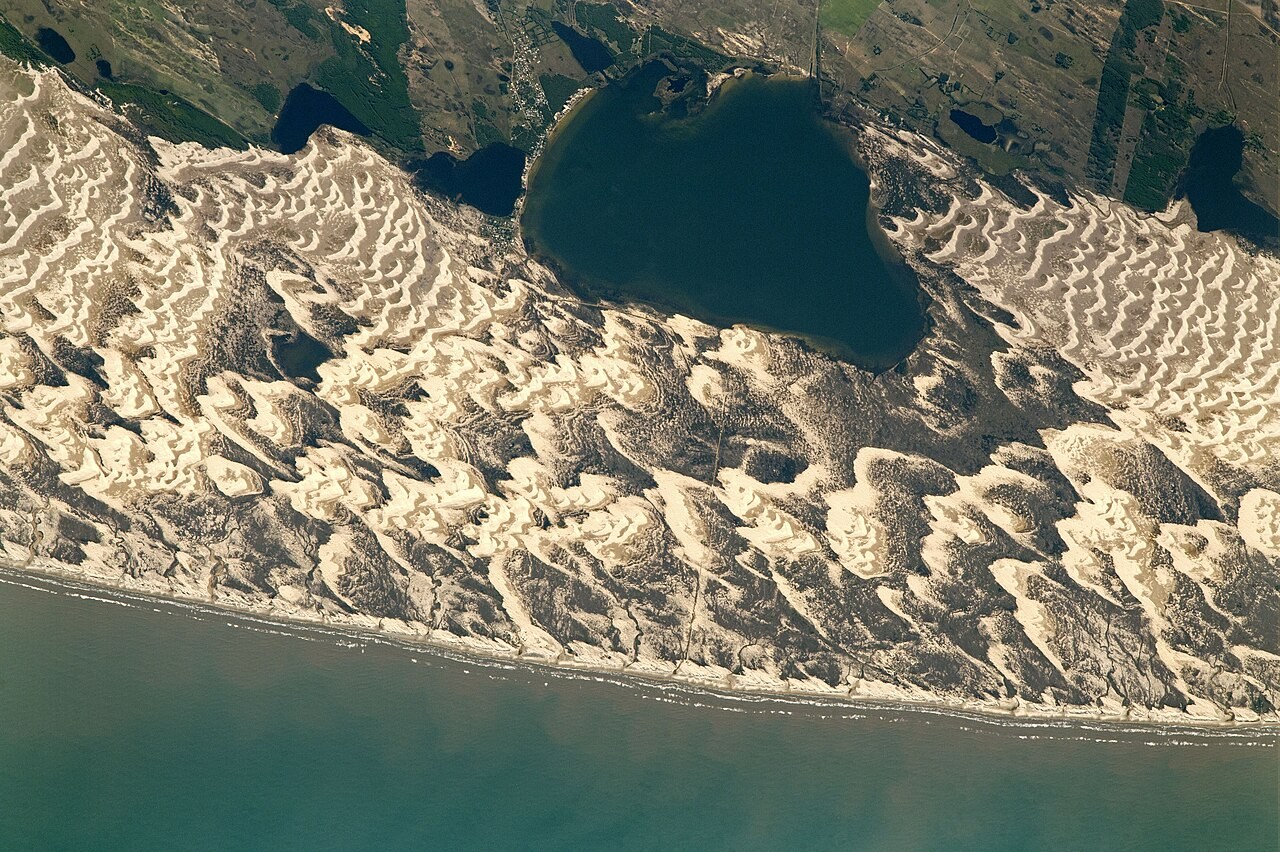
A suggested lesson sequence
Use these stages at your own pace. Pause for students to sketch, compare observations or lead part of the demonstration.
01
Observe
Find the wind arrow and the dune horns pointing downwind.
02
Tinker
Compare Barchan dune with Yardang ridges; Play follows enlarged grains.
03
Explain
How do erosion and deposition produce different landforms under the action of wind?
04
Check
Choose an answer and explain your reasoning. Each question includes feedback.
Rehearse with the model
The same scene and controls as the lab. Load it when you are ready; use Start projector for the full classroom view.
Before the lesson
Explain how wind erodes rock and transports sand, then identify the wind direction from the shape of a barchan dune.
Open the model before the lesson and choose a view that makes the important feature easy to see. Drag to rotate, and use the on-screen controls to change one variable at a time. The Controls panel explains the available keyboard shortcuts.
Pause the animation at a useful moment. Ask students what should happen next, then play it to test their explanation.
Guide the demonstration
Find the wind arrow and the dune horns pointing downwind.
Compare Barchan dune with Yardang ridges; Play follows enlarged grains.
Discuss a common misconception
“Every desert is covered by dunes.” Many deserts expose bedrock, gravel or other surfaces with little loose sand. Dunes require a suitable sediment supply and wind conditions that allow accumulation. Wind can erode one area while depositing material elsewhere, so aridity alone does not determine the landform.
Build the explanation
Wind transports particles by suspension, saltation and surface creep. Where sand supply and wind conditions allow accumulation, deposition builds dunes whose shapes reflect transport and local obstacles.
Compare Barchan dune with Yardang ridges; Play follows enlarged grains.
The examples show selected forms and transport directions; dune migration speed requires additional wind and sediment evidence.
Teaching notes
Explain that deserts can have rocky or gravel surfaces as well as areas covered by dunes.
Check that the horns of a barchan dune point downwind when students describe its shape.
Distinguish the movement of individual grains from the slower migration of an entire dune.
Check understanding
Open Check for 4 questions. Ask students to explain their choice before revealing the answer.
Return to the opening photograph. Ask students to identify one visible feature and explain which part of the model helps account for it.
Look more closely
Use these observations to connect the vocabulary to features students can identify.
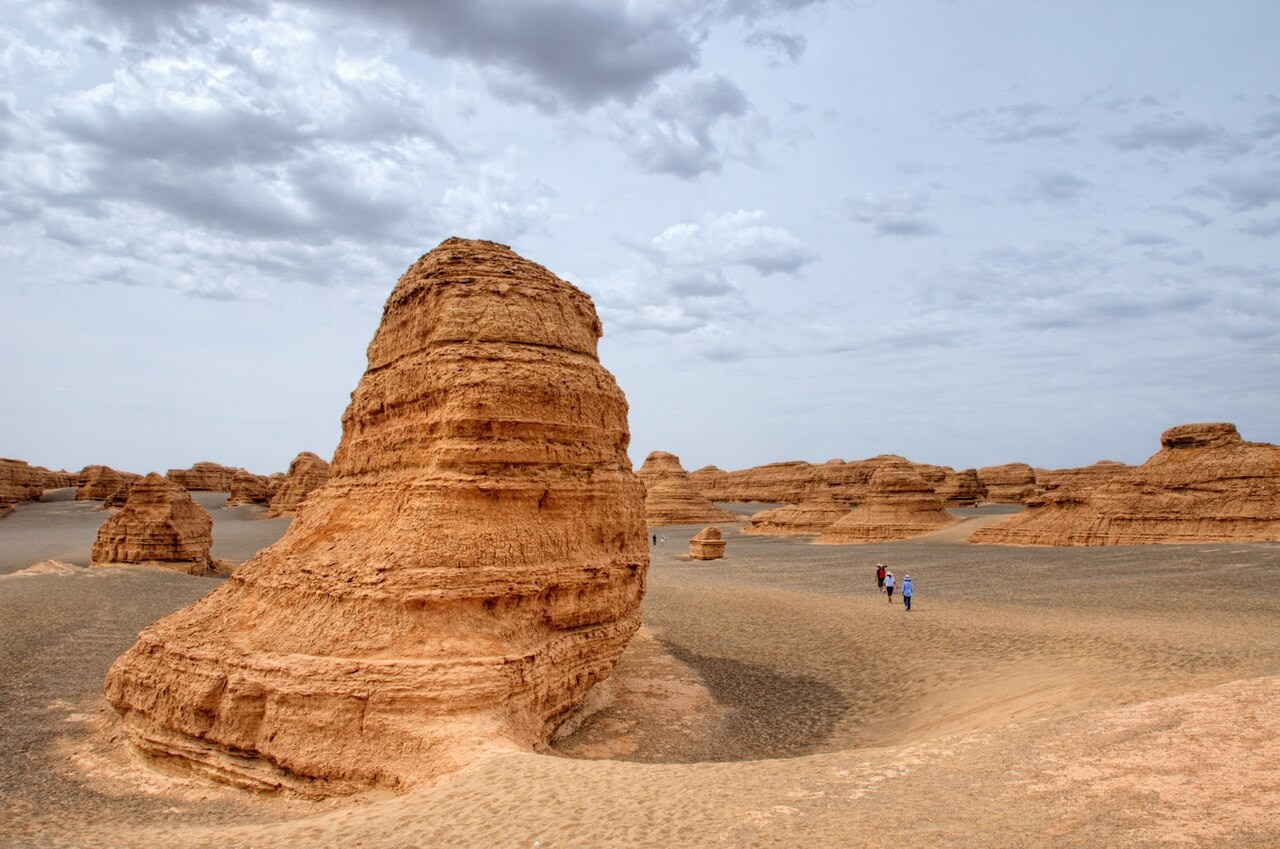
Yardang
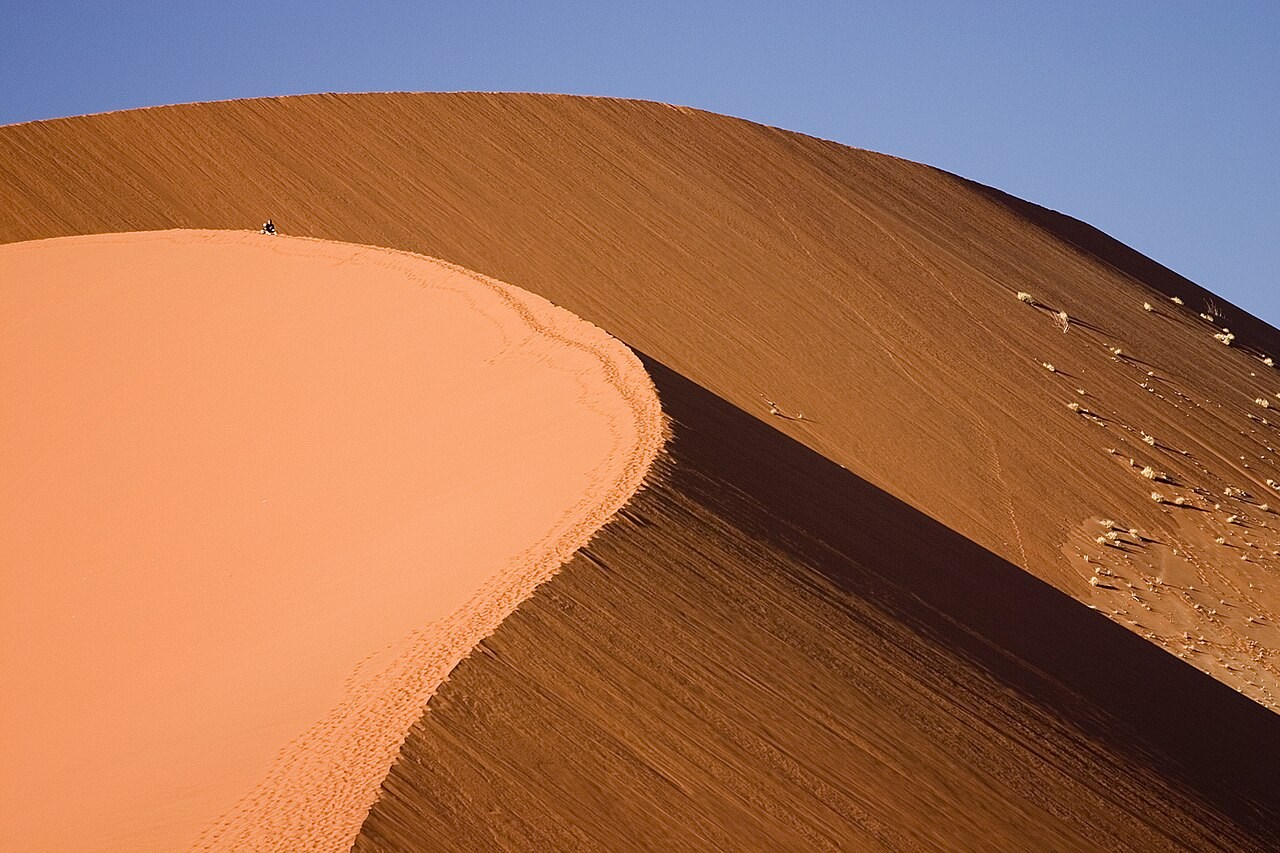
Deflation
Sources to keep beside the lesson
- USGS dunes
- NOAA Dust Bowl
- NPS dune types