Teachers
A lesson for your classroom or geography club
River deposition
All teacher notes · Open the lab
A suggested lesson sequence
Use these stages at your own pace. Pause for students to sketch, compare observations or lead part of the demonstration.
01
Observe
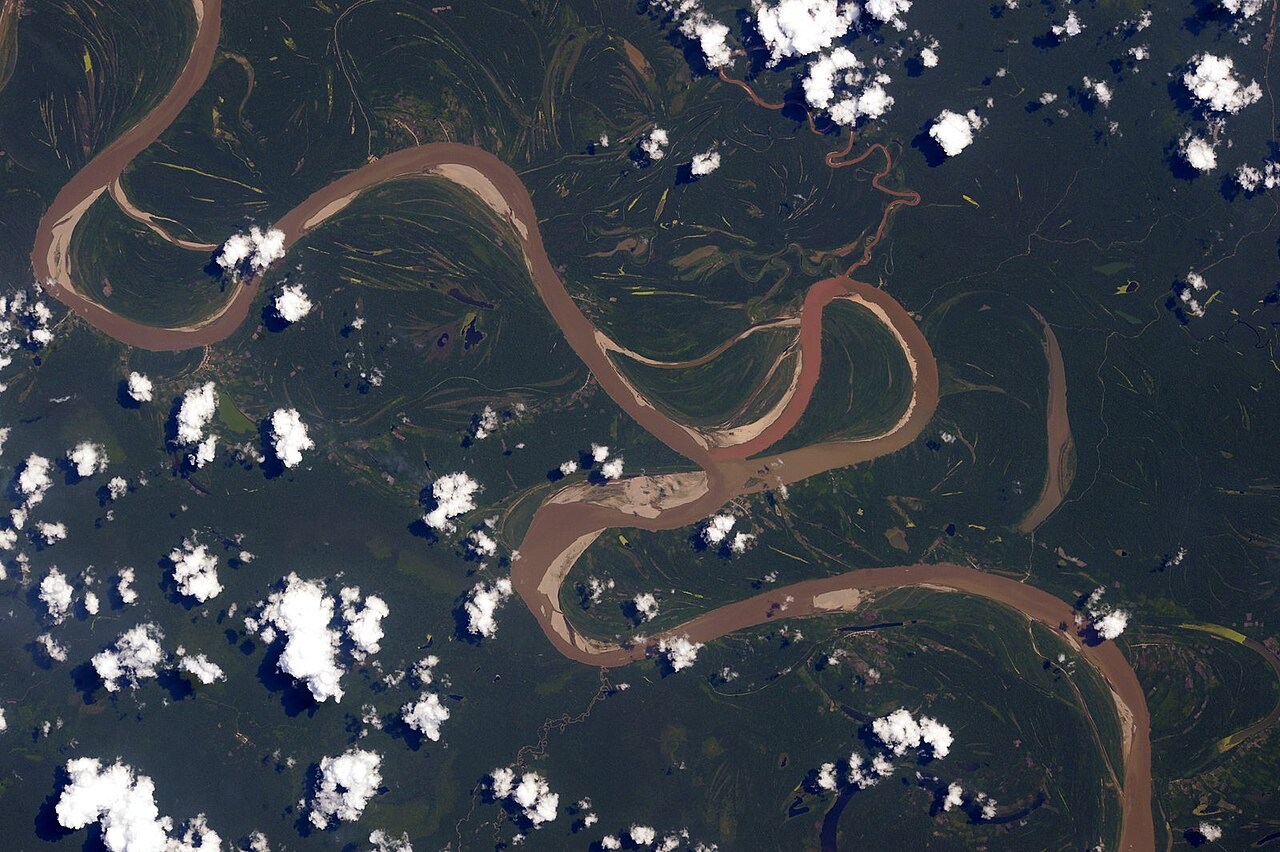
Locate the inner bank and point bar.
02
Tinker
Compare overbank flow and a delta; change the separate settling experiment.
03
Explain
Why can a river erode its outer bank while depositing sediment on the inner bank?
04
Check
Choose an answer and explain your reasoning. Each question includes feedback.
Rehearse with the model
The same scene and controls as the lab. Load it when you are ready; use Start projector for the full classroom view.
Before the lesson
Explain where rivers deposit sediment and compare the formation of point bars, natural levees and deltas.
Open the model before the lesson and choose a view that makes the important feature easy to see. Drag to rotate, and use the on-screen controls to change one variable at a time. The Controls panel explains the available keyboard shortcuts.
Pause the animation at a useful moment. Ask students what should happen next, then play it to test their explanation.
Guide the demonstration
Locate the inner bank and point bar.
Compare overbank flow and a delta; change the separate settling experiment.
Discuss a common misconception
“A river deposits all its sediment as soon as the water slows down.” Deposition depends on the ability of the flow to keep particular particles moving. Coarser material often settles or stops first as transport capacity falls, while finer particles may remain suspended farther downstream. Sediment size, turbulence, water depth and incoming supply all affect the result.
Build the explanation
Sediment is deposited when transport conditions no longer keep it moving. Inner bends, floodplains and river mouths create different settings for sorting and storing sediment.
Compare overbank flow and a delta; change the separate settling experiment.
The separate settling experiment describes small quartz spheres in still water; river turbulence and flocculation can change their behaviour.
Teaching notes
Distinguish sediment accumulation in a delta from processes operating in a tidal estuary.
Locate inner-bank deposition and outer-bank erosion correctly when interpreting a meander.
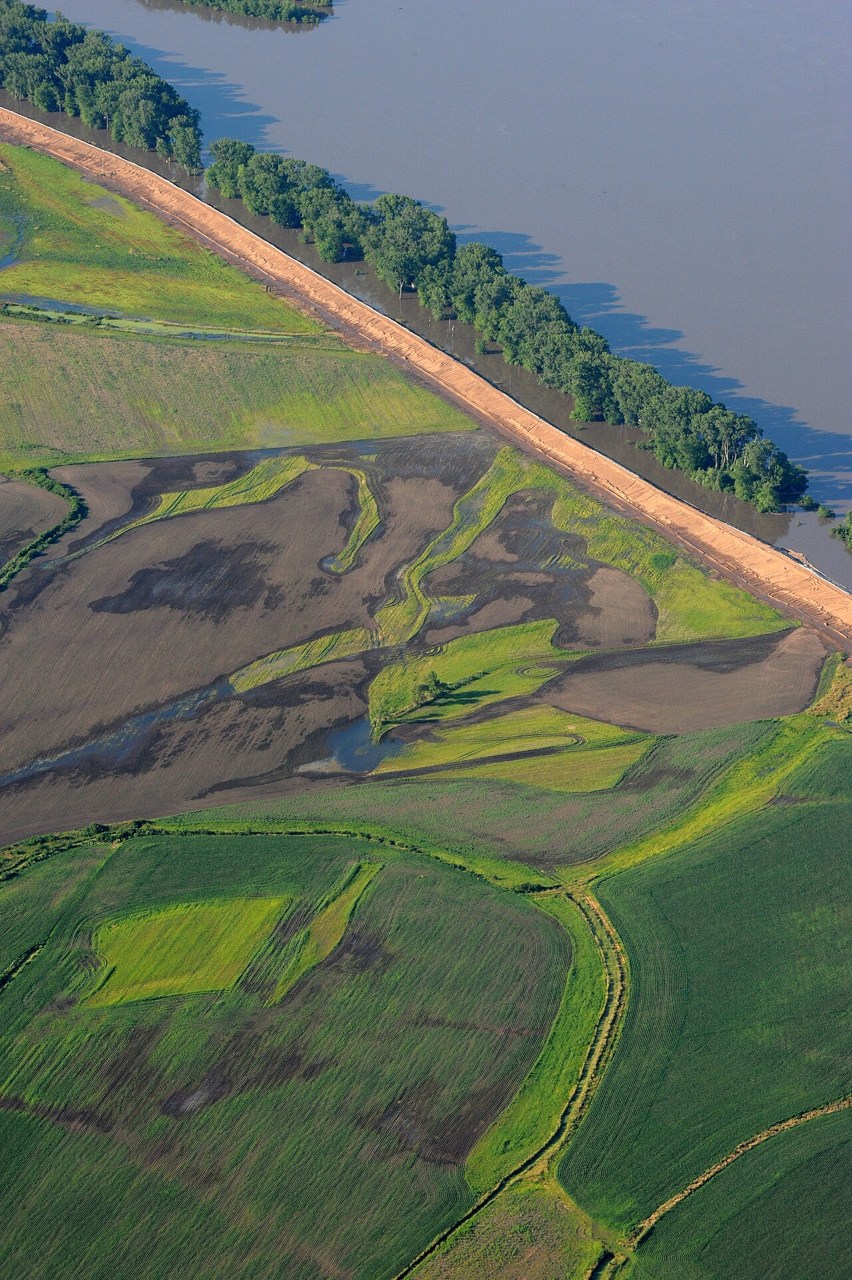
Explain that levees can form naturally during floods as well as being built or enlarged by people.
Check understanding
Open Check for 4 questions. Ask students to explain their choice before revealing the answer.
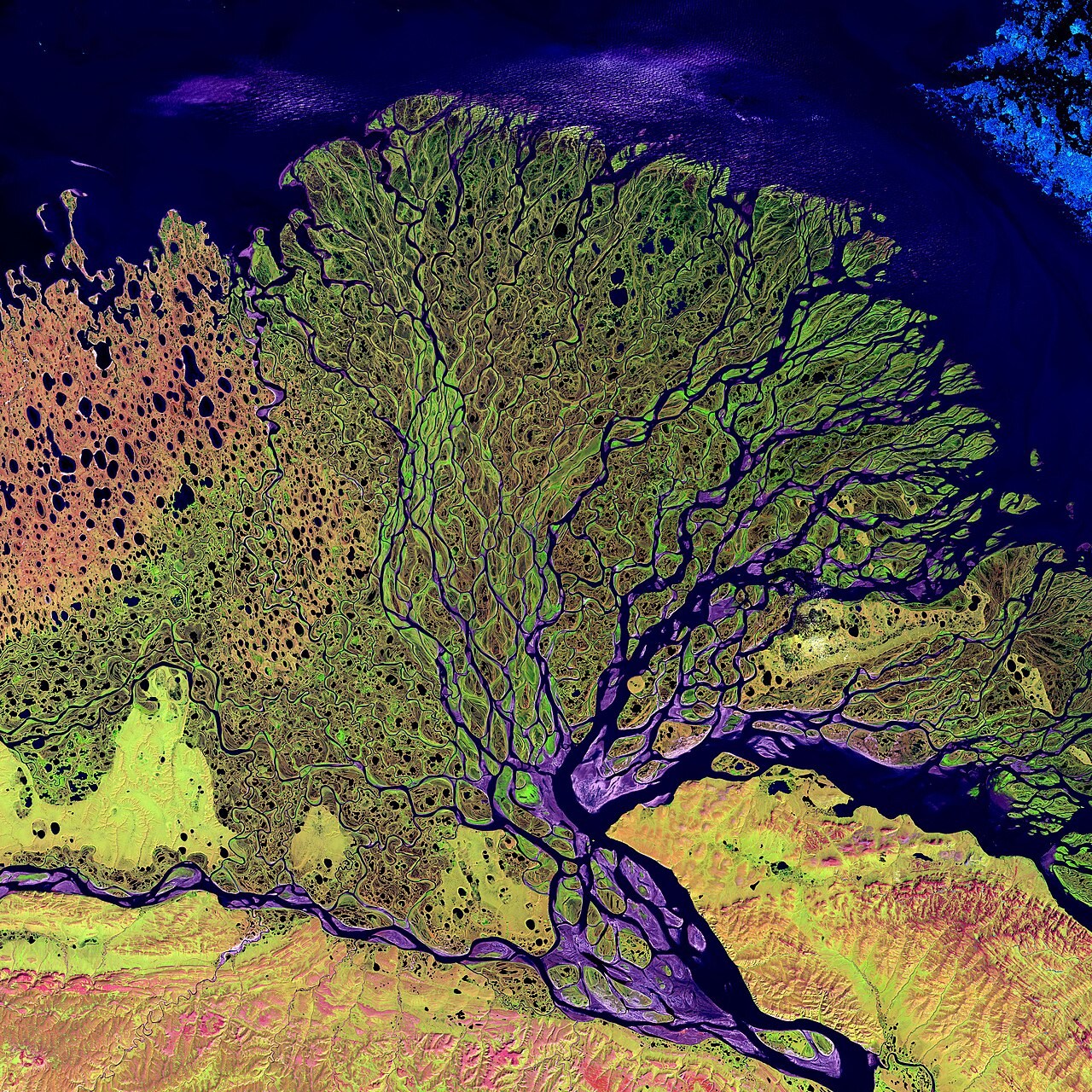
Return to the opening photograph. Ask students to identify one visible feature and explain which part of the model helps account for it.
Look more closely
Use these observations to connect the vocabulary to features students can identify.
Slip-off slope
Levée
Sources to keep beside the lesson
- USGS Mississippi
- BGS
- USGS floodplain sedimentation