Teachers
A lesson for your classroom or geography club
Earth’s interior
All teacher notes · Open the lab
A suggested lesson sequence
Use these stages at your own pace. Pause for students to sketch, compare observations or lead part of the demonstration.
01
Observe
Rotate the cutaway, then change Slice and Explode. Identify the four layers and read their material states.
02
Tinker
Restore unexploded spacing, then enable P/S waves. Compare transmission through solid mantle and liquid outer core.
03
Explain
How does the behaviour of P and S waves help us distinguish the mantle from the outer core?
04
Check
Choose an answer and explain your reasoning. Each question includes feedback.
Rehearse with the model
The same scene and controls as the lab. Load it when you are ready; use Start projector for the full classroom view.
Before the lesson
Identify Earth’s main layers and explain how seismic waves provide evidence for a liquid outer core.
Open the model before the lesson and choose a view that makes the important feature easy to see. Drag to rotate, and use the on-screen controls to change one variable at a time. The Controls panel explains the available keyboard shortcuts.
Pause the animation at a useful moment. Ask students what should happen next, then play it to test their explanation.
Guide the demonstration
Rotate the cutaway, then change Slice and Explode. Identify the four layers and read their material states.
Restore unexploded spacing, then enable P/S waves. Compare transmission through solid mantle and liquid outer core.
Discuss a common misconception
“The mantle is a continuous layer of liquid magma.” The mantle is predominantly solid rock that can deform slowly over geological time. Partial melting occurs in particular settings and supplies magma, but it does not make the whole mantle liquid. Earth’s liquid outer core is a separate layer composed mainly of metal.
Build the explanation
Seismic waves reveal an Earth with layers that differ in composition and physical state. The mantle is mainly solid rock, the outer core is liquid, and the inner core is solid.
Restore unexploded spacing, then enable P/S waves. Compare transmission through solid mantle and liquid outer core.
The cutaway shows a reference structure; its illustrative wave paths explain transmission rather than calculating earthquake travel times.
Teaching notes
Describe the mantle as predominantly solid rock that can deform slowly, rather than as a global magma ocean.
Use the wave illustration to discuss transmission through materials; it does not calculate seismic shadow zones.
Return the layers to their original spacing before comparing their depths or thicknesses.
Check understanding
Open Check for 4 questions. Ask students to explain their choice before revealing the answer.
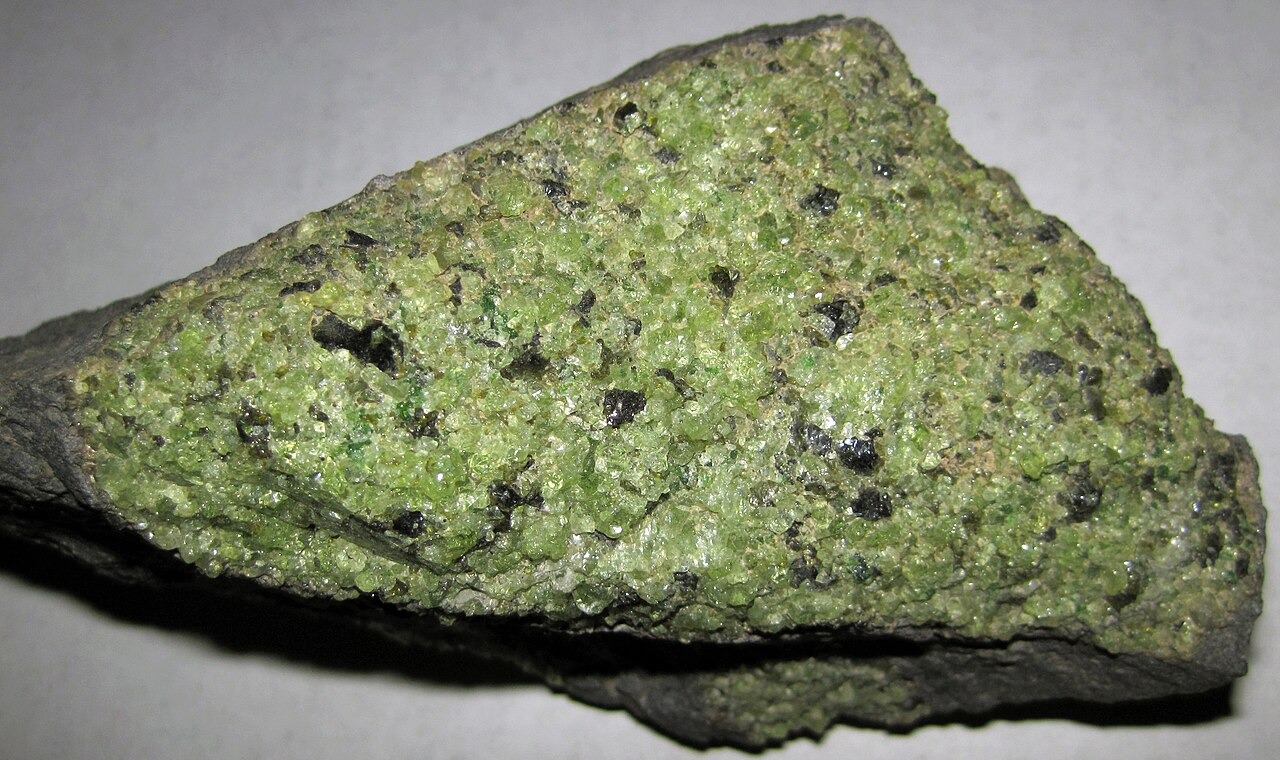
Return to the opening photograph. Ask students to identify one visible feature and explain which part of the model helps account for it.
Look more closely
Use these observations to connect the vocabulary to features students can identify.
Outer core
P-wave