Teachers
A lesson for your classroom or geography club
River regime
All teacher notes · Open the lab
A suggested lesson sequence
Use these stages at your own pace. Pause for students to sketch, compare observations or lead part of the demonstration.
01
Observe
Read the gold and blue annual discharge curves. Scrub through winter and locate water stored as snow.
02
Tinker
Follow the melt season and compare its flow peak with winter rain. Switch the dam on and compare the peak and delayed release.
03
Explain
How does storing precipitation as snow shift the timing of river flow?
04
Check
Choose an answer and explain your reasoning. Each question includes feedback.
Rehearse with the model
The same scene and controls as the lab. Load it when you are ready; use Start projector for the full classroom view.
Before the lesson
Compare annual patterns of river discharge and explain how rainfall, snowmelt and dams can change their timing.
Open the model before the lesson and choose a view that makes the important feature easy to see. Drag to rotate, and use the on-screen controls to change one variable at a time. The Controls panel explains the available keyboard shortcuts.
Pause the animation at a useful moment. Ask students what should happen next, then play it to test their explanation.
Guide the demonstration
Read the gold and blue annual discharge curves. Scrub through winter and locate water stored as snow.
Follow the melt season and compare its flow peak with winter rain. Switch the dam on and compare the peak and delayed release.
Discuss a common misconception
“A river’s seasonal flow pattern depends only on the amount of rain each month.” Rainfall matters, but snow accumulation and melt, evaporation, groundwater storage and reservoir operation can shift the timing of discharge. Water received in one season may reach the river in another. Explaining a regime therefore requires both the inputs and the processes that delay or remove water.
Build the explanation
A river regime describes the seasonal pattern of discharge. Rain may reach the river quickly, while snow stores water until melting; a reservoir can smooth and delay the resulting flow.
Follow the melt season and compare its flow peak with winter rain. Switch the dam on and compare the peak and delayed release.
Both catchments use invented repeating annual inputs, and the dam represents storage behaviour rather than an actual operating rule.
Teaching notes
Compare regimes across different climates rather than applying one annual pattern to every river.
Distinguish a monthly river regime from the short-term response shown by a storm hydrograph.
Use the graph’s stated scale and avoid assigning absolute discharge values to a normalised trace.
Check understanding
Open Check for 4 questions. Ask students to explain their choice before revealing the answer.
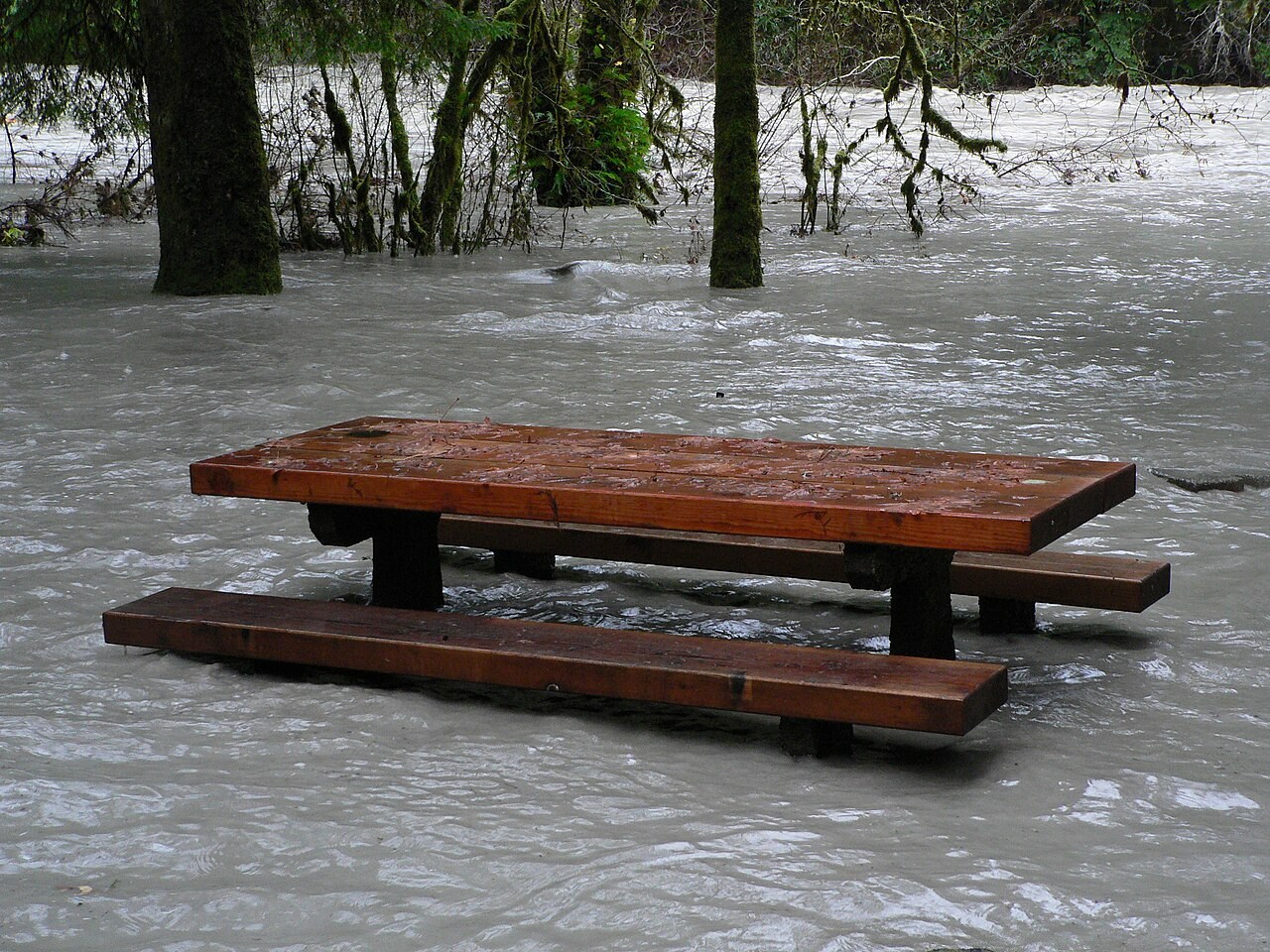
Return to the opening photograph. Ask students to identify one visible feature and explain which part of the model helps account for it.
Look more closely
Use these observations to connect the vocabulary to features students can identify.
Regime
Nival
Sources to keep beside the lesson
- NRFA
- USGS