Teachers
A lesson for your classroom or geography club
Why seasons happen
All teacher notes · Open the lab

A suggested lesson sequence
Use these stages at your own pace. Pause for students to sketch, compare observations or lead part of the demonstration.
01
Observe
Keep Orbit stretch at 0 and set Axial tilt to 0°. Play a year and read the two 12-hour daylight values. Switch to Earth close-up to inspect the terminator and axis.
02
Tinker
Set tilt to 23.44° and pause at the June direction, then December. Compare London with Sydney and trace the fixed axis direction.
03
Explain
Why do the hemispheres experience opposite seasons, even though both are nearly the same distance from the Sun?
04
Check
Choose an answer and explain your reasoning. Each question includes feedback.
Rehearse with the model
The same scene and controls as the lab. Load it when you are ready; use Start projector for the full classroom view.
Before the lesson
Explain how axial tilt changes daylight and solar angle, then predict which hemisphere experiences summer at a chosen point in the year.
Open the model before the lesson and choose a view that makes the important feature easy to see. Drag to rotate, and use the on-screen controls to change one variable at a time. The Controls panel explains the available keyboard shortcuts.
Pause the animation at a useful moment. Ask students what should happen next, then play it to test their explanation.
Guide the demonstration
Keep Orbit stretch at 0 and set Axial tilt to 0°. Play a year and read the two 12-hour daylight values. Switch to Earth close-up to inspect the terminator and axis.
Set tilt to 23.44° and pause at the June direction, then December. Compare London with Sydney and trace the fixed axis direction.
Discuss a common misconception
“Summer happens because Earth is closer to the Sun.” Earth’s axial tilt changes both the angle of sunlight and the length of daylight. The hemisphere tilted towards the Sun has summer while the other has winter. Earth is closest to the Sun in early January, so orbital distance cannot explain their opposite seasons.
Build the explanation
Earth’s tilted axis changes the angle of sunlight and the length of the day as Earth travels around the Sun. When one hemisphere tilts towards the Sun, the other experiences winter.
Set tilt to 23.44° and pause at the June direction, then December. Compare London with Sydney and trace the fixed axis direction.
The adjustable orbit is an experiment for isolating tilt and distance; its calendar alignment is not Earth’s actual orbit.
Teaching notes
Use the model’s position in the year to compare seasonal geometry rather than to identify an exact calendar date.
Distinguish the pattern of incoming sunlight from a prediction of local temperature.
Explain that Earth and its axis are enlarged in the display so students can see the geometry.
Check understanding
Open Check for 4 questions. Ask students to explain their choice before revealing the answer.
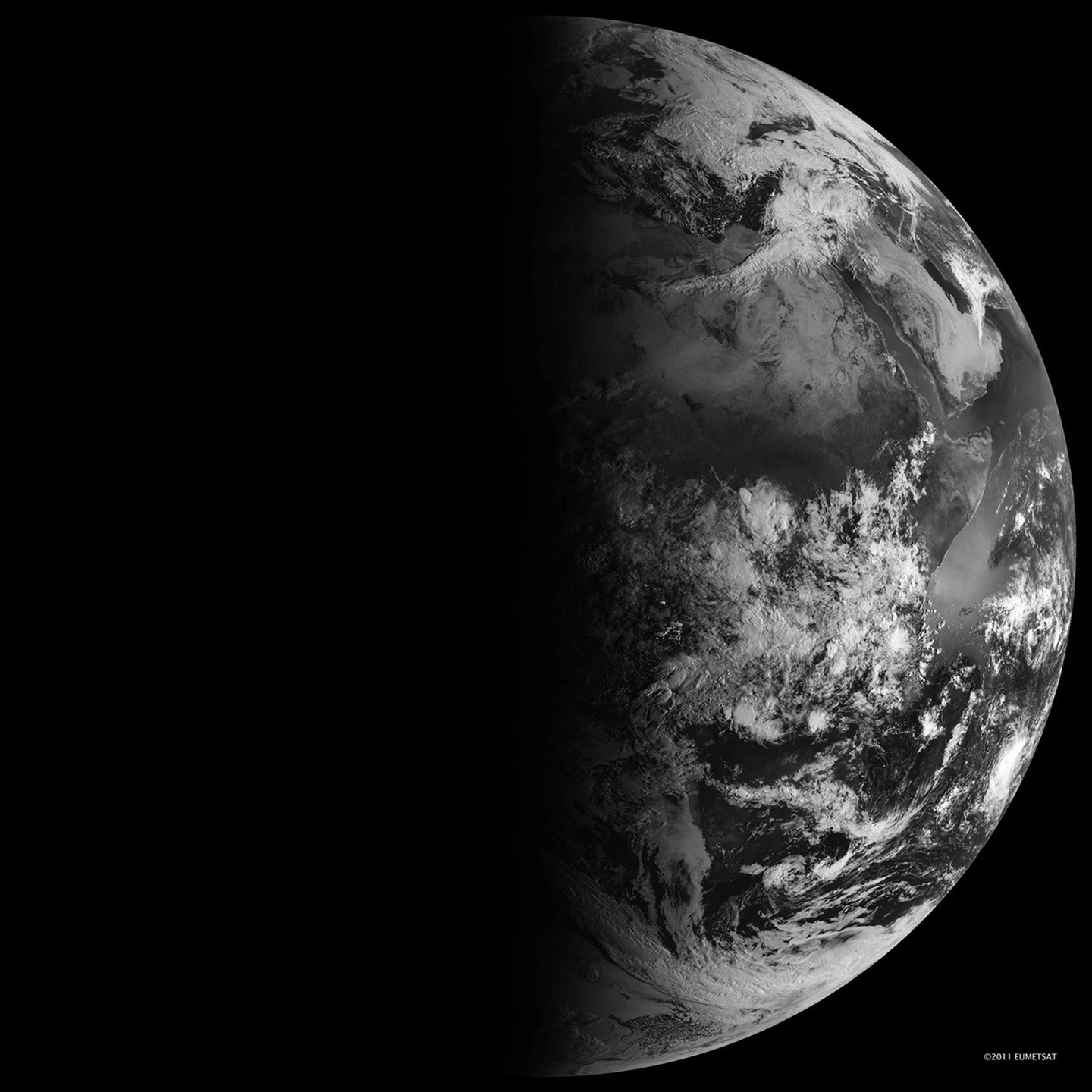
Return to the opening photograph. Ask students to identify one visible feature and explain which part of the model helps account for it.
Look more closely
Use these observations to connect the vocabulary to features students can identify.
Terminator
Perihelion

Sources to keep beside the lesson
Watch an explanation
The film stays paused until you play it.
Why we have seasons Khan Academy