Teachers
A lesson for your classroom or geography club
Eclipses
All teacher notes · Open the lab
A suggested lesson sequence
Use these stages at your own pace. Pause for students to sketch, compare observations or lead part of the demonstration.
01
Observe
Start with the lunar shadow close-up and follow the Moon through the penumbra and umbra. Then set Node direction to 60° and compare the miss.
02
Tinker
Select Shadow close-up, Lunar and Node direction 0°. Scrub through the umbra and penumbra. Choose Solar and compare near and far Moon distances.
03
Explain
Why does changing the direction of the Moon’s orbital nodes turn an eclipse into a miss?
04
Check
Choose an answer and explain your reasoning. Each question includes feedback.
Rehearse with the model
The same scene and controls as the lab. Load it when you are ready; use Start projector for the full classroom view.
Before the lesson
Explain how the Sun, Earth and Moon must align for an eclipse, and identify the regions of total and partial shadow.
Open the model before the lesson and choose a view that makes the important feature easy to see. Drag to rotate, and use the on-screen controls to change one variable at a time. The Controls panel explains the available keyboard shortcuts.
Pause the animation at a useful moment. Ask students what should happen next, then play it to test their explanation.
Guide the demonstration
Predict whether every full Moon enters Earth’s shadow. Keep the real tilt and set Node direction to 60°. Observe the miss.
Select Shadow close-up, Lunar and Node direction 0°. Scrub through the umbra and penumbra. Choose Solar and compare near and far Moon distances.
Discuss a common misconception
“Every full Moon produces a lunar eclipse.” A lunar eclipse requires the full Moon to pass through Earth’s shadow. The Moon’s orbital plane is tilted by about five degrees relative to Earth’s orbital plane, so it usually passes above or below that shadow. An eclipse occurs only when the alignment is sufficiently close to an orbital node.
Build the explanation
An eclipse requires the Sun, Earth and Moon to align closely enough for one body to enter another’s shadow. The Moon’s orbital tilt usually carries it above or below the necessary alignment.
Select Shadow close-up, Lunar and Node direction 0°. Scrub through the umbra and penumbra. Choose Solar and compare near and far Moon distances.
The shadow experiment isolates alignment and angular size; it is not a calendar of future eclipses.
Teaching notes
Distinguish ordinary lunar phases from eclipses caused by one body entering another’s shadow.
Use the Moon’s orbital tilt of about 5° to explain why an eclipse does not occur every month.
Check whether the Moon is near an orbital node when testing the alignment for an eclipse.
Check understanding
Open Check for 4 questions. Ask students to explain their choice before revealing the answer.
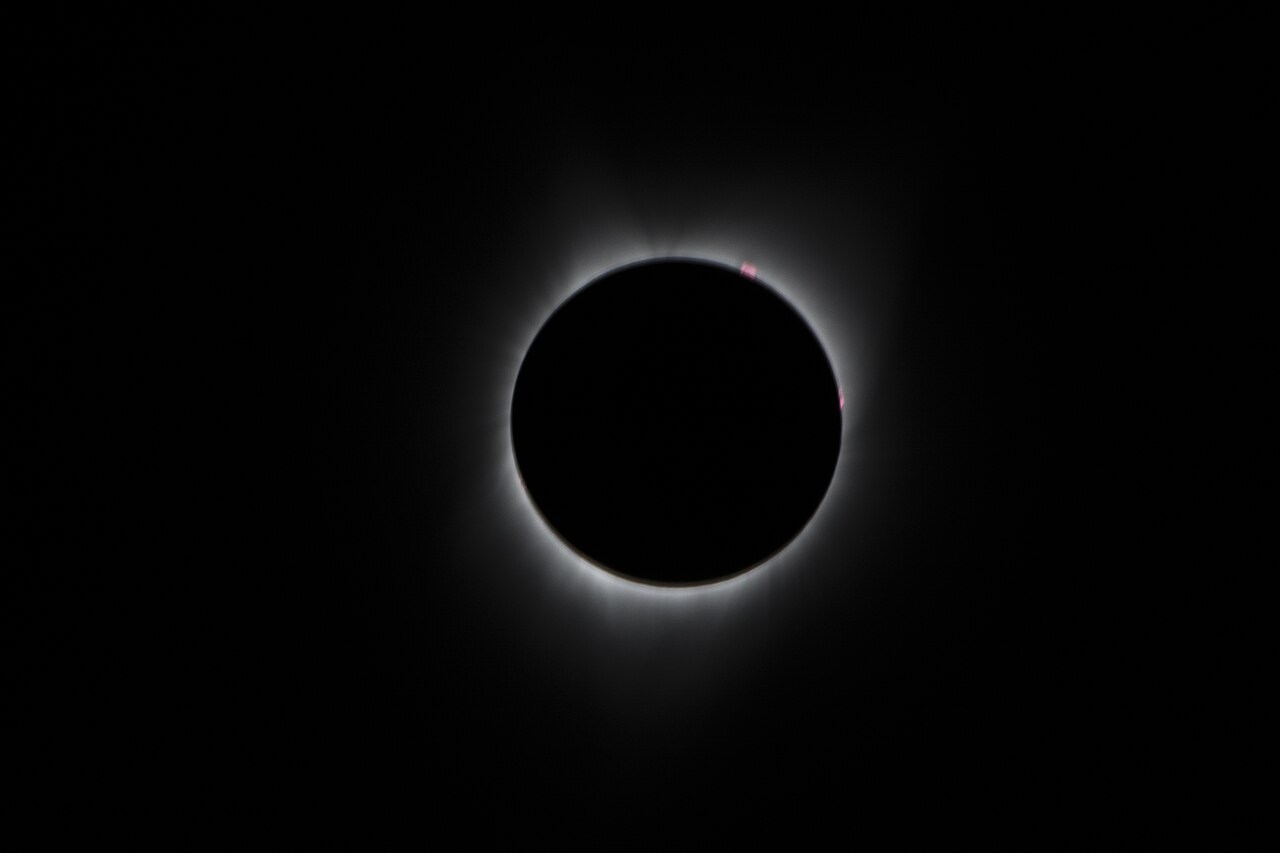
Return to the opening photograph. Ask students to identify one visible feature and explain which part of the model helps account for it.
Look more closely
Use these observations to connect the vocabulary to features students can identify.
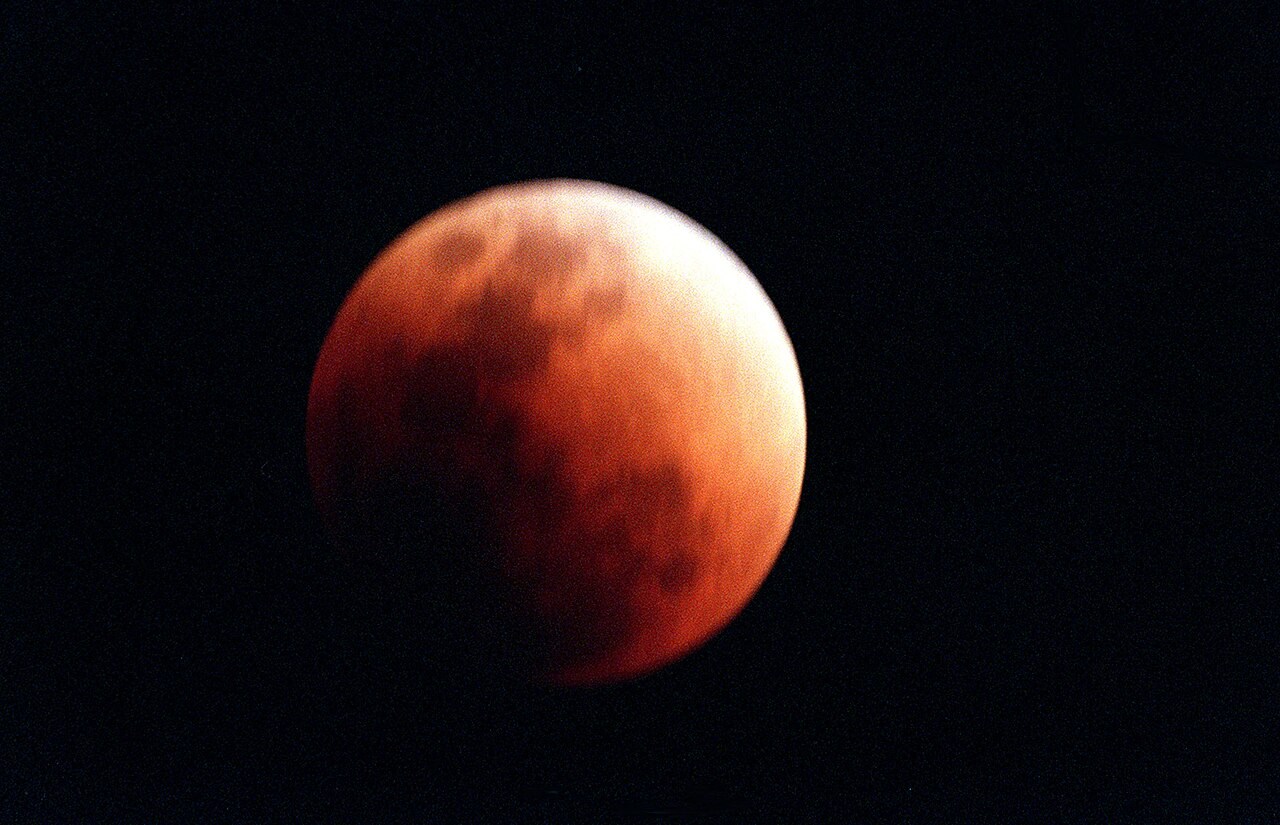
Penumbra
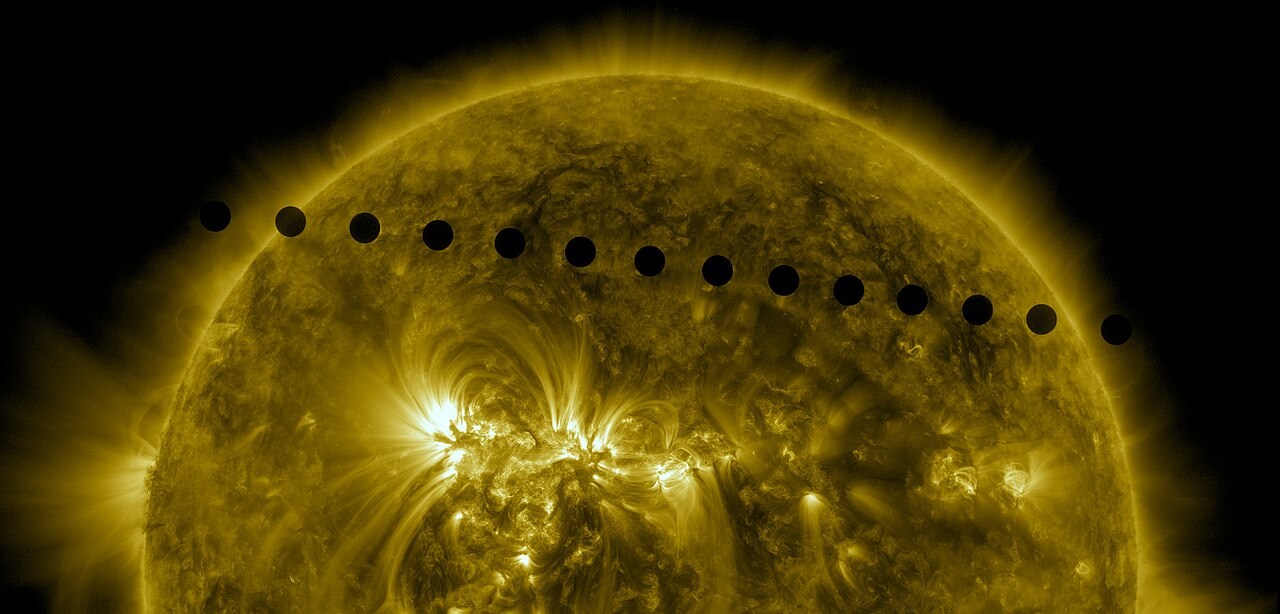
Node
Sources to keep beside the lesson
- NASA eclipses
- NASA eclipse geometry