Teachers
A lesson for your classroom or geography club
Three-cell circulation
All teacher notes · Open the lab
A suggested lesson sequence
Use these stages at your own pace. Pause for students to sketch, compare observations or lead part of the demonstration.
01
Observe
Identify Hadley, Ferrel and Polar in the zonal-mean view. Follow near-surface easterlies and westerlies.
02
Tinker
Distinguish the eddy-driven Ferrel circulation from a thermally direct cell. Play the illustrative annual shift; explain why real ITCZ positions differ.
03
Explain
How do rising and sinking air help explain broad rainfall patterns, and why does the Ferrel cell need a different explanation?
04
Check
Choose an answer and explain your reasoning. Each question includes feedback.
Rehearse with the model
The same scene and controls as the lab. Load it when you are ready; use Start projector for the full classroom view.
Before the lesson
Locate the Hadley, Ferrel and polar cells and relate their circulation to broad patterns of winds and rainfall.
Open the model before the lesson and choose a view that makes the important feature easy to see. Drag to rotate, and use the on-screen controls to change one variable at a time. The Controls panel explains the available keyboard shortcuts.
Pause the animation at a useful moment. Ask students what should happen next, then play it to test their explanation.
Guide the demonstration
Identify Hadley, Ferrel and Polar in the zonal-mean view. Follow near-surface easterlies and westerlies.
Distinguish the eddy-driven Ferrel circulation from a thermally direct cell. Play the illustrative annual shift; explain why real ITCZ positions differ.
Discuss a common misconception
“The three atmospheric cells are fixed loops followed by individual air parcels.” The three-cell model describes broad averages of circulation across latitude. Real air moves through changing weather systems and mixes between regions. Continents, seasons and ocean conditions disturb the pattern, and the midlatitude Ferrel circulation is maintained largely by weather systems rather than a simple isolated convection loop.
Build the explanation
Unequal solar heating and Earth’s rotation organise broad atmospheric circulation. Rising and sinking regions help explain the trade winds, westerlies and major pressure belts.
Distinguish the eddy-driven Ferrel circulation from a thermally direct cell. Play the illustrative annual shift; explain why real ITCZ positions differ.
The three-cell pattern is an average framework; actual circulation shifts with seasons, continents and changing weather.
Teaching notes
Use the three-cell model as a broad circulation pattern rather than three equal, fixed cells.
Locate the United Kingdom in the midlatitudes rather than in the Hadley cell, and allow the ITCZ to shift seasonally.
Explain that the Ferrel cell is an indirect circulation influenced by midlatitude weather systems.
Check understanding
Open Check for 4 questions. Ask students to explain their choice before revealing the answer.
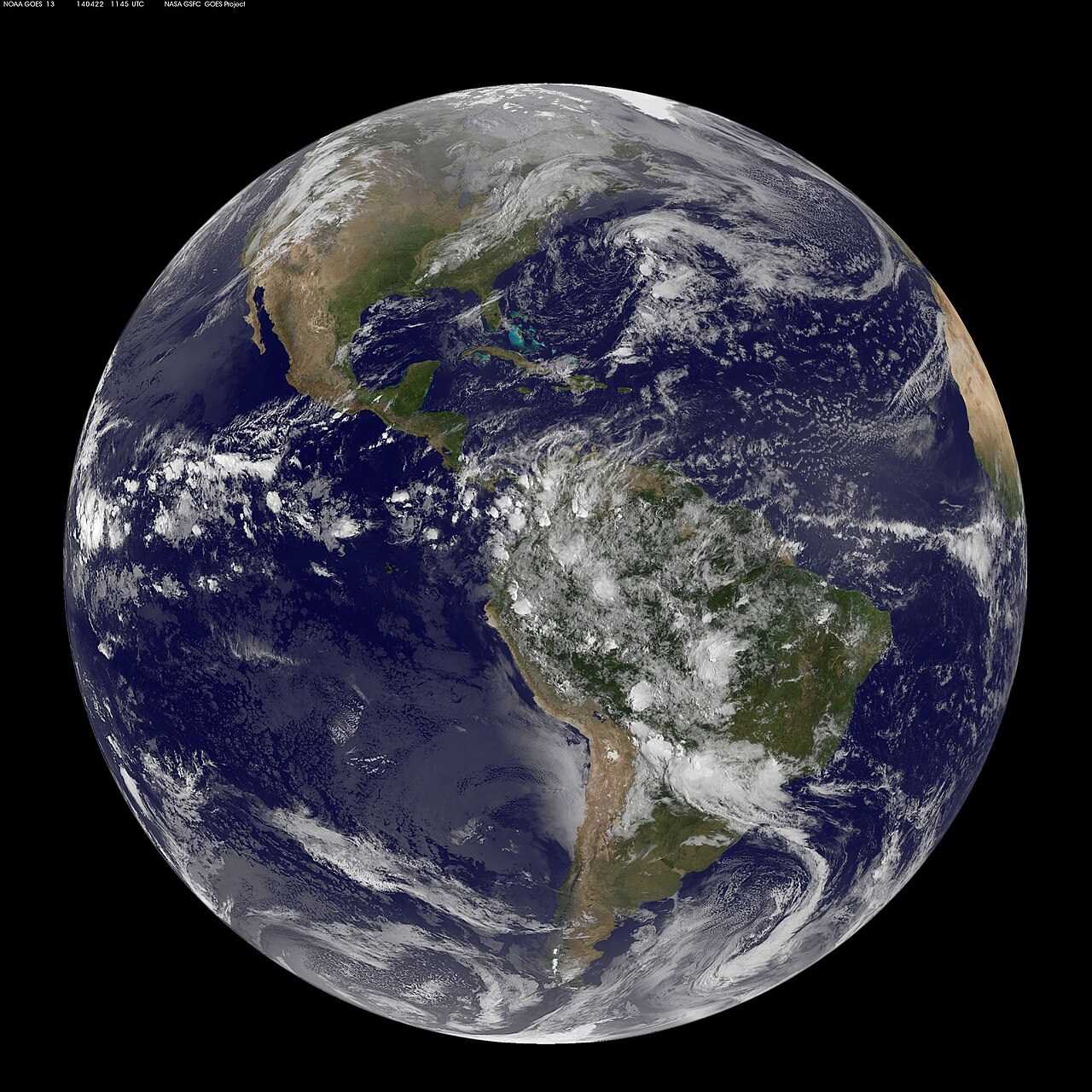
Return to the opening photograph. Ask students to identify one visible feature and explain which part of the model helps account for it.
Look more closely
Use these observations to connect the vocabulary to features students can identify.
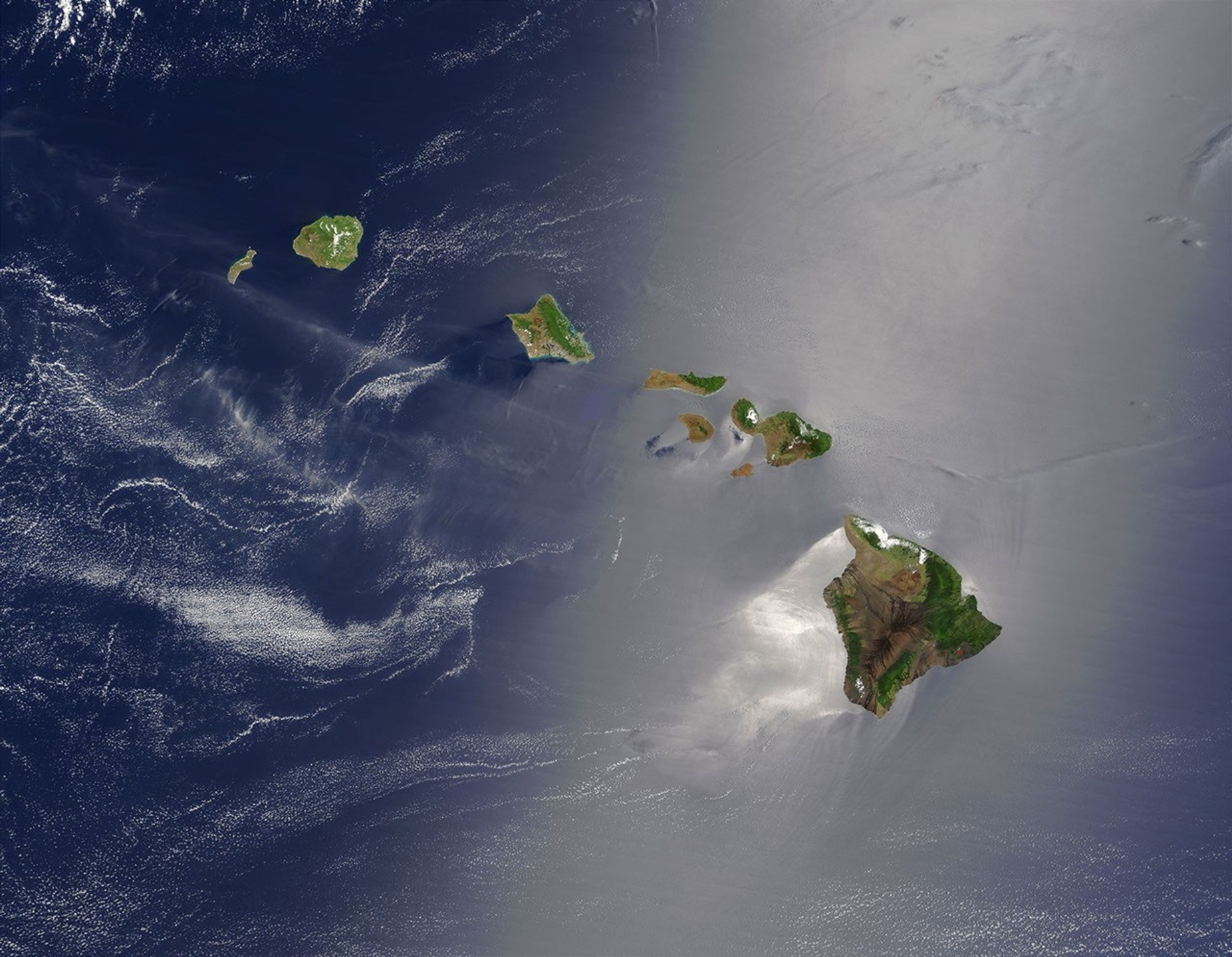
Trade winds
Sources to keep beside the lesson
- NOAA circulation
- Met Office tropical weather
- Met Office global circulation
- Met Office ITCZ