Teachers
A lesson for your classroom or geography club
Weathering
All teacher notes · Open the lab
A suggested lesson sequence
Use these stages at your own pace. Pause for students to sketch, compare observations or lead part of the demonstration.
01
Observe
Choose Freezing and compare occupied volume before and after freezing. Compare physical scale and distinguish real opening from visual exaggeration.
02
Tinker
Choose Carbonate dissolution and read the reaction and mass balance. Compare Root growth, naming both mechanical and chemical biological effects.
03
Explain
How does each weathering process change rock in place, and what would be needed to transport the fragments away?
04
Check
Choose an answer and explain your reasoning. Each question includes feedback.
Rehearse with the model
The same scene and controls as the lab. Load it when you are ready; use Start projector for the full classroom view.
Before the lesson
Compare how freezing water, weakly acidic water and growing roots break down rock in place.
Open the model before the lesson and choose a view that makes the important feature easy to see. Drag to rotate, and use the on-screen controls to change one variable at a time. The Controls panel explains the available keyboard shortcuts.
Pause the animation at a useful moment. Ask students what should happen next, then play it to test their explanation.
Guide the demonstration
Choose Freezing and compare occupied volume before and after freezing. Compare physical scale and distinguish real opening from visual exaggeration.
Choose Carbonate dissolution and read the reaction and mass balance. Compare Root growth, naming both mechanical and chemical biological effects.
Discuss a common misconception
“Chemical and mechanical weathering are separate alternatives that cannot act together.” Several weathering processes can affect the same rock. Mechanical cracking exposes new surfaces to chemical reactions, while chemical alteration can weaken material for later breakage. Temperature, water, organisms and rock properties influence which processes are most effective in a particular setting.
Build the explanation
Weathering changes rock in place. Freezing water, chemical dissolution and biological activity can weaken it through different mechanisms, often acting together before erosion transports the material.
Choose Carbonate dissolution and read the reaction and mass balance. Compare Root growth, naming both mechanical and chemical biological effects.
The demonstrations conserve the stated material quantities but prescribe the visible changes rather than calculating a universal weathering rate.
Teaching notes
Distinguish weathering in place from erosion that removes and transports material.
Explain how water, temperature, organisms and rock type influence which weathering processes are effective.
Use a carbonate rock such as limestone to demonstrate carbonation rather than assuming all rocks react in the same way.
Check understanding
Open Check for 4 questions. Ask students to explain their choice before revealing the answer.
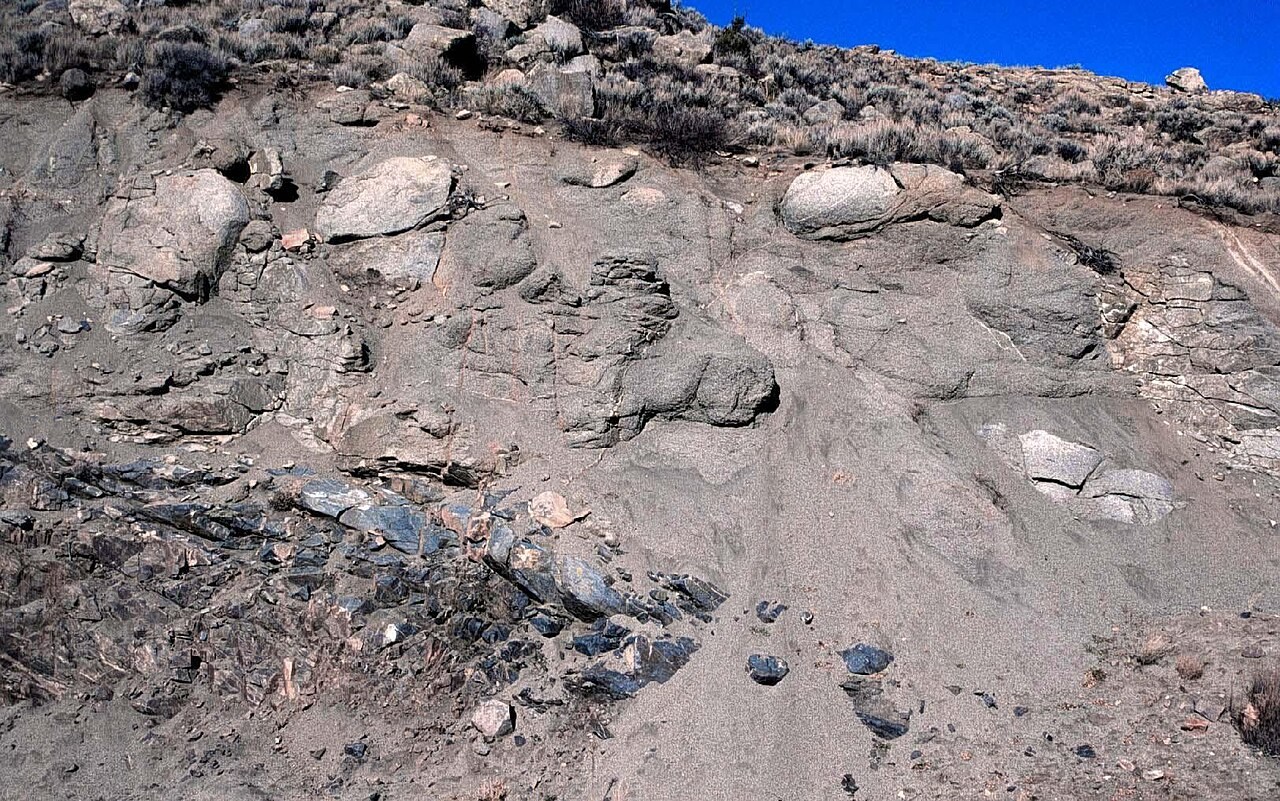
Return to the opening photograph. Ask students to identify one visible feature and explain which part of the model helps account for it.
Look more closely
Use these observations to connect the vocabulary to features students can identify.
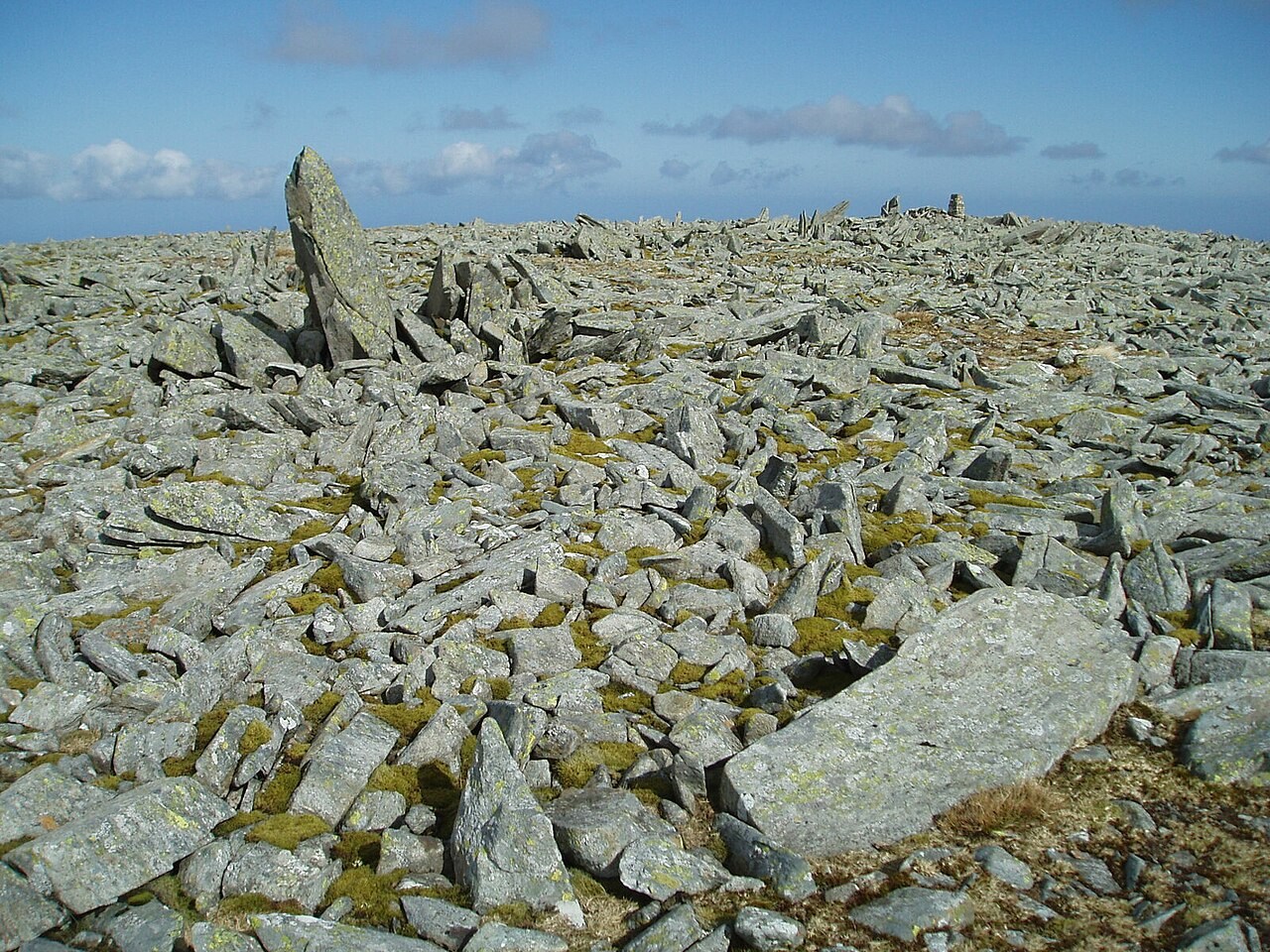
Mechanical weathering
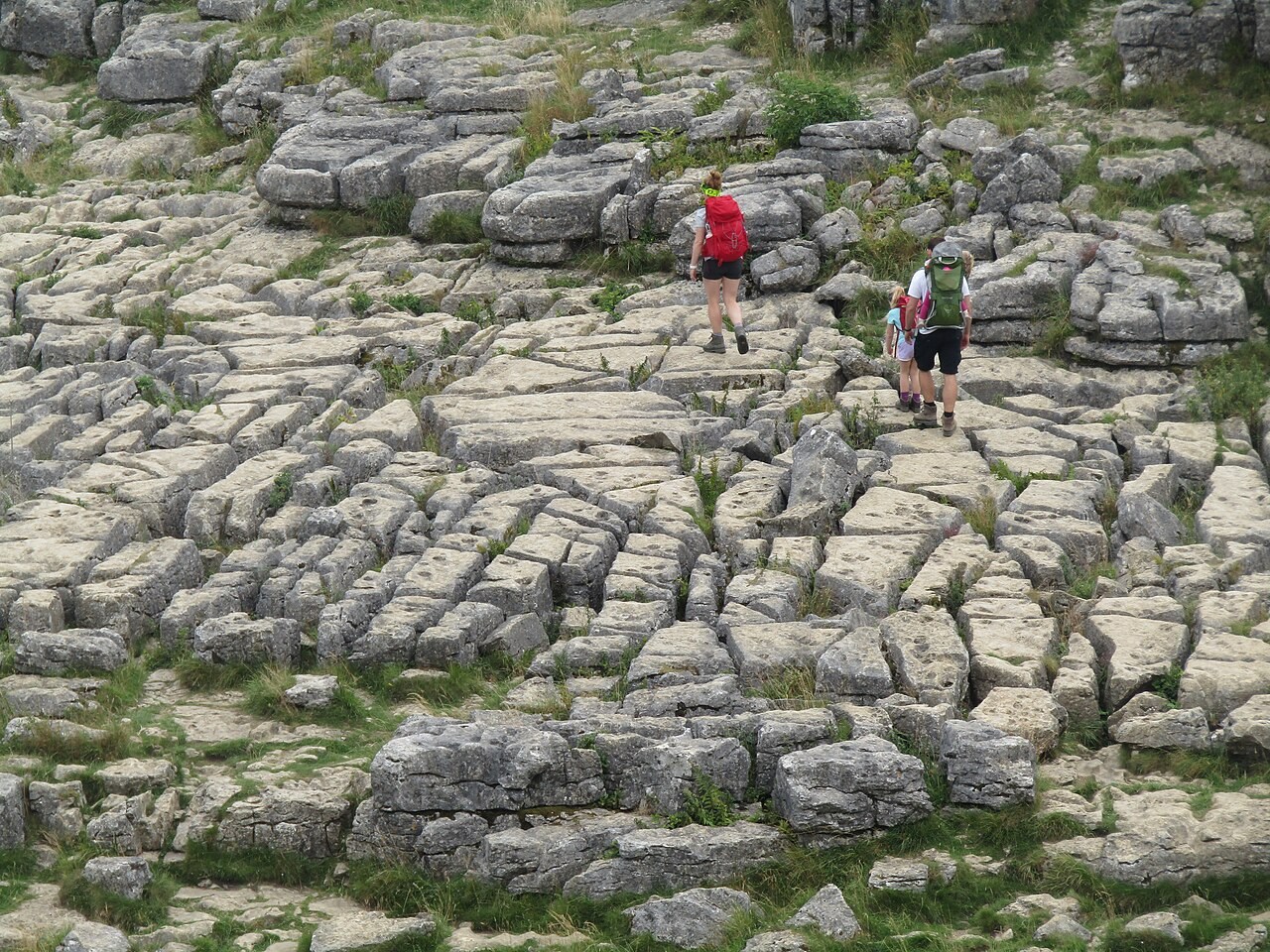
Chemical weathering
Sources to keep beside the lesson
- BGS weathering
- USGS
- BGS weathering processes